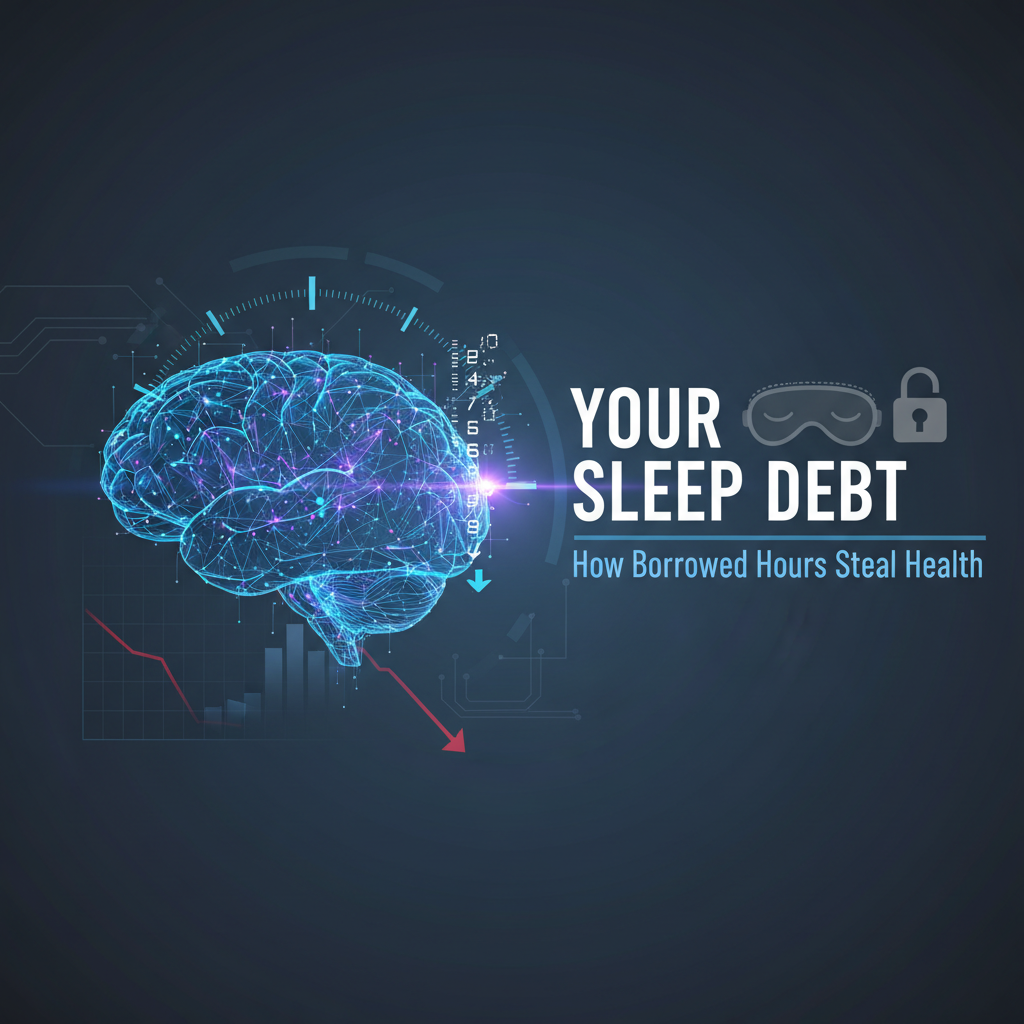
Your Sleep Debt: How Borrowed Hours Steal Health
 Dominic Mueller
Your Sleep Debt: How Borrowed Hours Steal Health
The Invisible Ledger: Are You Paying the Price for Borrowed Time?
We live in a world that often rewards busyness. The hustle culture extols early mornings, late nights, and the relentless pursuit of goals. In this relentless race, one of the first things to get trimmed from our schedules is often sleep. We tell ourselves we'll "catch up later," or "power through," sacrificing precious hours of rest for work, study, or entertainment. This seemingly innocuous trade-off creates something insidious and pervasive: sleep debt.
Sleep debt, also known as sleep deficit, is the cumulative effect of not getting enough sleep. It's like borrowing money from your future self, but instead of currency, you're borrowing precious hours of vital restoration. And just like financial debt, sleep debt accrues interest, compounding its negative effects on your physical and mental health, your cognitive function, and even your lifespan. It's a silent thief, gradually eroding your well-being, one missed hour at a time.
This isn't just about feeling a bit groggy in the morning. The science is unequivocal: chronic sleep deprivation has profound, long-term consequences that reach into every corner of our existence. In this comprehensive guide, we'll delve deep into the mechanics of sleep debt, explore its alarming impact on our health, unravel the time-related aspects of this modern epidemic, and equip you with practical strategies to reclaim your rest and repay your invisible ledger.
Understanding the "Borrowed" Hours: What is Sleep Debt?
At its core, sleep debt is the difference between the amount of sleep you need and the amount you actually get. For most adults, the recommended amount of sleep is between 7 and 9 hours per night. If you consistently sleep less than this — say, 6 hours a night when your body needs 8 — you're accumulating 2 hours of sleep debt every single day. Over a week, that's 14 hours. Over a month, that's roughly 60 hours!
It's crucial to distinguish between acute and chronic sleep debt.
- Acute sleep debt is what you experience after pulling an all-nighter or having a few late nights in a row. You might feel exceptionally tired the next day, but a solid night's sleep or two can often resolve it.
- Chronic sleep debt is far more dangerous. This occurs when you consistently fall short of your sleep needs over weeks, months, or even years. This persistent deficit chips away at your body's ability to function optimally, leading to a cascade of negative effects that are often mistaken for normal aging or the stresses of modern life.
Interesting Fact: Research suggests that even just one hour less sleep per night for a week can lead to a measurable cognitive impairment equivalent to a blood alcohol content of 0.10% – legally drunk in most places! Your brain functions as if impaired, even if you feel perfectly capable.
The concept of "catching up on sleep" is also a tricky one. While a long weekend lie-in can somewhat alleviate the immediate grogginess, it rarely fully repays a significant chronic sleep debt. Scientists have found that the restorative processes that occur during deep sleep and REM sleep need consistent, timely performance. You can't simply "bank" sleep or repay years of debt in a few days. The body needs regularity, not just volume.
The Time-Crunch Trap: How Modern Life Fuels Sleep Debt
Our contemporary world seems almost perfectly designed to foster sleep debt. The 24/7 economy, global connectivity, and the blurring lines between work and personal life all contribute to a collective erosion of sleep.
- Technology's Allure: The blue light emitted by smartphones, tablets, and computers suppresses melatonin production, our natural sleep hormone. The endless scroll of social media, binge-watching, and late-night emails keep our minds stimulated long past bedtime. Each minute spent on a screen in the evening is a minute stolen from potential sleep.
- Work Demands: Long working hours, shift work, and the pressure to be constantly available mean that sleep is often sacrificed at the altar of productivity. The very notion of "burning the midnight oil" is glorified, despite its detrimental effects on actual long-term output.
- Social & Family Commitments: Between childcare, social engagements, and household chores, many individuals, particularly parents, find their sleep hours squeezed to the absolute minimum. The perception that sleep is a luxury rather than a necessity often leads to it being the first thing cut from a busy schedule.
- The "Time Gaps": We often use fragmented pockets of time throughout the day – commuting, waiting, brief breaks – to catch up on emails or social media. While seemingly productive, this constant engagement prevents our minds from ever truly switching off, making it harder to transition into a restful state when bedtime finally arrives. The lack of distinct periods for rest and activity further exacerbates the problem.
This cultural phenomenon creates a vicious cycle. The more sleep-deprived we become, the less efficient and productive we are, leading to more time spent trying to complete tasks, further cutting into sleep.
The Health Heist: How Sleep Debt Steals Your Well-being
The consequences of accumulated sleep debt are far-reaching, affecting nearly every physiological system and cognitive function. It's a fundamental stressor that unravels your body's ability to repair, regenerate, and regulate itself.
Cognitive Decline and Mental Health
- Impaired Focus & Concentration: One of the most immediate effects. Sleep debt makes it difficult to sustain attention, leading to errors, decreased productivity, and a higher risk of accidents. Your brain's prefrontal cortex, responsible for executive functions, is particularly vulnerable.
- Memory Lapses: Sleep is crucial for memory consolidation. During deep sleep, the brain processes and stores information from the day. Without sufficient sleep, this process is hampered, leading to difficulties in learning new things and remembering existing knowledge.
- Reduced Problem-Solving & Creativity: When tired, your brain struggles with complex decision-making, critical thinking, and innovative thought. You become less adaptable and more prone to rigid thinking.
- Mood Disturbances: Chronic sleep debt is strongly linked to irritability, anxiety, and an increased risk of depression. Sleep deprivation can disrupt neurotransmitter balance, particularly serotonin and dopamine, which play key roles in mood regulation. Research Highlight: A study published in the journal Sleep found that individuals with chronic insomnia were significantly more likely to develop depression.
Physical Health Deterioration
- Weakened Immune System: During sleep, your body produces protective proteins called cytokines. Sleep debt reduces the production of these infection-fighting antibodies and cells. This leaves you more susceptible to colds, flu, and other infections, and can even reduce the effectiveness of vaccinations.
- Increased Risk of Chronic Diseases:
- Cardiovascular Issues: Sleep deprivation contributes to high blood pressure, inflammation, and an increased risk of heart disease, heart attack, and stroke. One study showed even a single night of sleep deprivation can elevate markers for cardiovascular stress.
- Diabetes: Sleep plays a critical role in regulating blood sugar. Insufficient sleep can lead to insulin resistance, making your body less effective at using glucose, which increases the risk of type 2 diabetes.
- Obesity: Sleep loss disrupts the balance of appetite-regulating hormones. Ghrelin, which signals hunger, increases, while leptin, which signals fullness, decreases. This can lead to increased food intake, particularly cravings for high-calorie, sugary foods, contributing to weight gain.
- Accelerated Aging: Chronic sleep deprivation can accelerate cellular aging and impact skin health, leading to dullness, fine lines, and slower healing. It's a fundamental stressor that wears down the body over time.
- Pain Sensitivity: Lack of sleep lowers your pain threshold, making existing chronic pain worse and increasing sensitivity to acute pain.
Safety Risks
- Impaired Motor Skills & Reaction Time: Sleep-deprived individuals exhibit slower reaction times and reduced coordination, comparable to or even worse than being under the influence of alcohol.
- Increased Accident Risk: Drowsy driving is a major public health concern, responsible for thousands of car crashes annually. Operating heavy machinery or performing tasks requiring precision also becomes hazardous. The National Sleep Foundation reports that 60% of adult drivers have driven while drowsy, and 37% have fallen asleep at the wheel.
Interesting Fact: The 1986 Challenger space shuttle disaster and the Chernobyl nuclear accident are both believed to have had elements of human error exacerbated by sleep deprivation among key personnel.
The Time to Act: Practical Takeaways for Reclaiming Your Rest
Repaying sleep debt is not an overnight process, but it's one of the most impactful investments you can make in your health and longevity. It requires commitment, consistency, and a shift in mindset.
1. Prioritize Sleep: Make it Non-Negotiable
- Schedule It: Just as you schedule meetings or appointments, schedule your bedtime. Work backward from your desired wake-up time to ensure you allocate 7-9 hours for sleep.
- Shift Your Perception: Recognize sleep not as a luxury or a waste of time, but as a fundamental pillar of health, productivity, and happiness. It's an essential physiological requirement, not an optional activity.
2. Establish a Consistent Sleep Schedule
- The Power of Regularity: Go to bed and wake up at roughly the same time every day, even on weekends. This helps regulate your circadian rhythm, your body's internal clock. Consistency is far more important than trying to "catch up" on one long sleep session.
- Small Adjustments: If you need to shift your bedtime, do so gradually, by 15-minute increments every few days, to allow your body to adapt.
3. Create a Bedtime Ritual (Your "Wind-Down" Hour)
- Signal to Your Body: Dedicate the hour before bed to relaxing activities. This tells your body it's time to transition from activity to rest.
- Avoid Stimulants: Steer clear of caffeine and nicotine in the late afternoon and evening. Alcohol might make you feel drowsy, but it disrupts sleep quality later in the night.
- Screen Detox: Turn off all electronic screens (phones, tablets, computers, TVs) at least 60 minutes before bed. The blue light and mental stimulation interfere with melatonin production. Read a physical book, listen to calming music, take a warm bath, or practice gentle stretching.
- Dim the Lights: Lowering the lights in your home in the evening also signals to your body that night is approaching.
4. Optimize Your Sleep Environment
- Darkness is Key: Make your bedroom as dark as possible. Use blackout curtains or an eye mask. Even a small amount of light can disrupt sleep.
- Cool & Quiet: Maintain a cool room temperature (ideally between 60-67°F or 15-19°C). Use earplugs or a white noise machine if your environment is noisy.
- Comfort: Ensure your mattress and pillows are comfortable and supportive.
5. Mind Your Diet and Exercise
- Timing Your Meals: Avoid heavy, rich meals close to bedtime. If you need a snack, opt for something light and easily digestible.
- Regular Physical Activity: Regular exercise can significantly improve sleep quality. However, avoid intense workouts too close to bedtime, as they can be stimulating. Aim to finish vigorous exercise at least 3-4 hours before sleep.
6. Manage Stress
- Pre-Sleep Worry Dump: If your mind races with worries at night, try journaling or making a to-do list a few hours before bed. Get it out of your head and onto paper.
- Relaxation Techniques: Practice mindfulness, meditation, deep breathing exercises, or progressive muscle relaxation to calm your mind before sleep.
7. Strategic Napping (Use with Caution)
- Short & Sweet: A 20-30 minute power nap can help boost alertness and performance, especially if you have an acute sleep deficit.
- Avoid Late Naps: Napping too late in the day can interfere with nighttime sleep. Aim to finish naps by mid-afternoon.
8. Consult a Professional
- If you consistently struggle with sleep despite implementing these strategies, or if you suspect you might have a sleep disorder (like insomnia, sleep apnea, or restless legs syndrome), consult your doctor. A sleep specialist can provide diagnosis and tailored treatment.
Conclusion: Investing in Your Future Self, One Hour at a Time
Sleep debt is an invisible burden that weighs heavily on our health, productivity, and overall quality of life. It's a testament to the profound interconnectedness of time and well-being. Every hour we "borrow" from our sleep is an hour we pay back with diminished cognitive function, weakened immunity, increased chronic disease risk, and impaired mood.
The good news is that while you can't simply rewind time and "un-borrow" past hours, you can start repaying your debt today. By understanding the critical role of sleep, prioritizing it in your life, and implementing consistent, healthy sleep habits, you're not just getting more rest; you're making a powerful investment in your future self. You're reclaiming your vitality, sharpening your mind, bolstering your resilience, and ultimately adding more vibrant, healthy years to your life.
Don't let the ticking clock of modern life dictate your sleep patterns. Take control, honor your body's fundamental need for rest, and discover the transformative power of a full night's sleep. Your health, happiness, and even your future self will thank you for it.
Make Every Second Count
Inspired by this article? Take action now! Create a custom timer to help you manage your time better and reach your goals.
Create Your TimerAbout Dominic Mueller
Dominic Mueller is a German director for television and film with a deep fascination for time and time measurement. When he's not behind the camera crafting compelling visual stories, he explores the intricate world of temporal perception and timekeeping. Based in the beautiful city of Cologne, Germany, Dominic shares his life with his girlfriend and their beloved dog, Nala, finding inspiration in both the precise mechanics of time and the fleeting moments that make life meaningful.