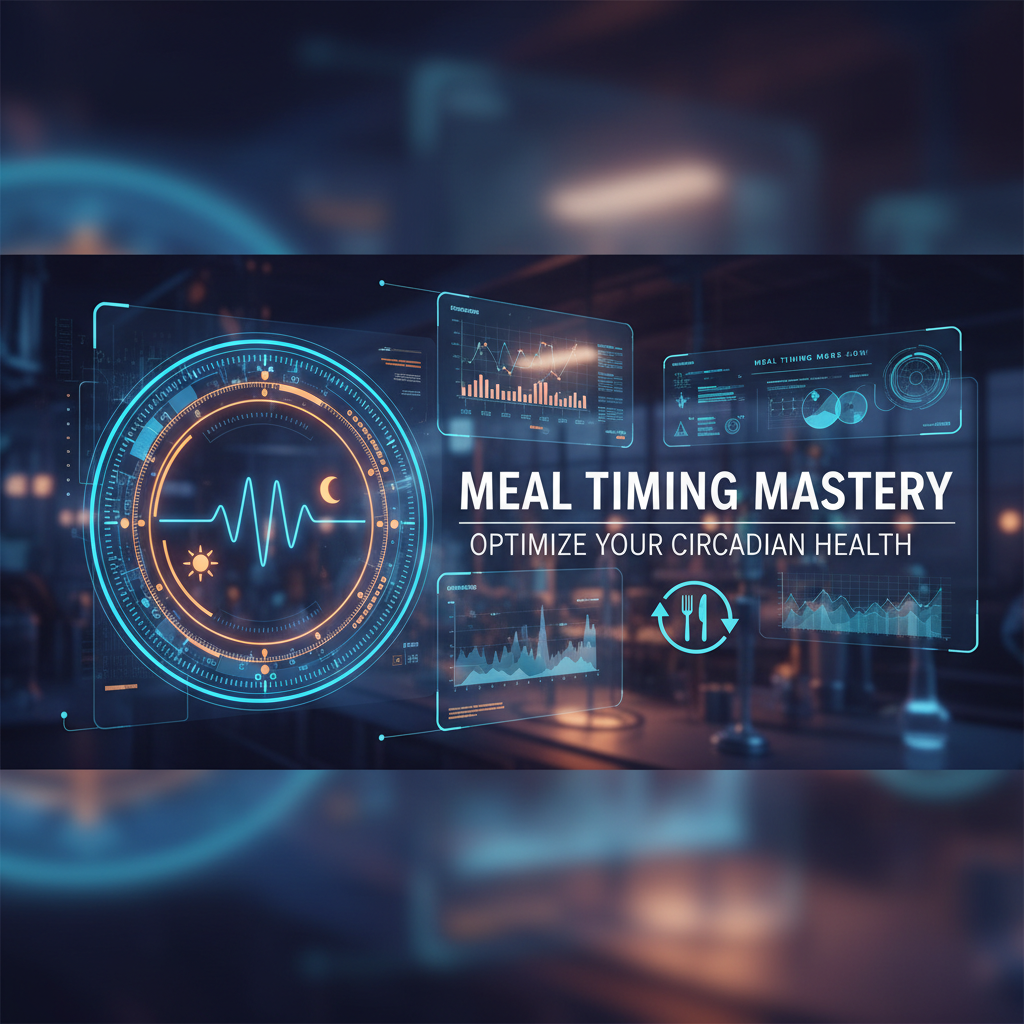
Meal Timing Mastery: Optimize Your Circadian Health
 Dominic Mueller
Meal Timing Mastery: Syncing Your Diet with Your Internal Clock for Optimal Health
In a world obsessed with what we eat, a powerful, yet often overlooked, dimension of nutrition is rapidly gaining scientific traction: when we eat. Forget the latest fad diet for a moment; imagine a health strategy that taps into your body's innate biological rhythms, a system honed over millions of years of evolution. This is the promise of meal timing mastery, a journey into the fascinating interplay between your diet and your circadian rhythm.
For too long, our modern lifestyles have waged war on our internal clocks. Irregular work shifts, late-night snacking, and a constant barrage of artificial light have thrown our bodily systems into disarray. But what if we could reclaim control, not just by choosing kale over cake, but by strategically aligning our eating patterns with our natural biological timeline? This isn't just about weight loss; it's about unlocking a cascade of benefits, from improved metabolism and better sleep to enhanced mood and disease prevention.
Join us as we dive deep into the science of meal timing, explore the critical role of circadian rhythms, and uncover practical strategies to optimize your eating schedule for a healthier, more vibrant life.
The Rhythm of Life: Understanding Your Circadian Clock
At the heart of meal timing mastery lies the circadian rhythm. Derived from the Latin "circa diem," meaning "about a day," these are roughly 24-hour cycles that regulate nearly every physiological process in our bodies. Think of your body as a sophisticated orchestra, and your circadian rhythm as the conductor, ensuring that each instrument (organ system) plays its part at precisely the right moment.
The master conductor of this orchestra is the suprachiasmatic nucleus (SCN), a tiny cluster of neurons located in the hypothalamus of your brain. The SCN is primarily entrained (synchronized) by external cues, most powerfully light. When light hits your retina, signals travel to the SCN, which then orchestrates the release of hormones like melatonin (sleep-inducing) and cortisol (wakefulness-promoting).
However, the SCN isn't the only clock in town. Nearly every cell and organ in your body possesses its own peripheral clocks. These peripheral clocks are heavily influenced by the SCN, but they also respond to other critical time-givers, or zeitgebers (German for "time-givers"), the most potent of which, besides light, is food.
This is where meal timing enters the spotlight.
The Dynamic Duo: Food and Circadian Rhythms
For millennia, our ancestors ate when the sun was up, foraging and hunting during daylight hours and resting during darkness. Their meal patterns were naturally aligned with their circadian rhythms. Modern society, with its 24/7 access to food, has disrupted this fundamental synchronicity.
When you eat, your peripheral clocks in organs like the liver, pancreas, gut, and fat tissue receive a strong signal. If these food signals are consistently out of sync with your SCN's master clock (e.g., eating a large meal late at night when your SCN is preparing for sleep), it can lead to a phenomenon known as circadian misalignment. This internal "jet lag" can have profound negative consequences for your health.
The Science of Strategic Eating: Why Timing Matters
Research into chrononutrition (the study of how food timing affects health) has exploded in recent years, revealing a wealth of fascinating insights. It turns out, a calorie at 8 AM is not metabolized the same way as a calorie at 8 PM.
Metabolism and Energy Expenditure
Your metabolic machinery is not constant throughout the day. It peaks during daylight hours and slows down significantly in the evening and night.
- Insulin Sensitivity: Studies show that insulin sensitivity is highest in the morning and progressively declines throughout the day. This means your body is more efficient at processing carbohydrates and sugars early in the day. Eating carb-heavy meals late at night, when insulin sensitivity is lower, can lead to higher blood sugar spikes and increased fat storage.
- Thermogenesis: The thermic effect of food (the energy expended to digest, absorb, and metabolize food) also varies. Some research suggests that you burn more calories digesting the same meal in the morning compared to the evening.
- Fat Storage vs. Fat Burning: Your body's propensity to store fat is higher at night. During the day, particularly after a period of fasting, your body is more inclined to burn stored fat for energy.
Gut Microbiome Health
Your gut microbes, billions of them, also operate on a circadian rhythm. They play a crucial role in digestion, nutrient absorption, and immune function. Disrupting their natural day-night cycle through erratic eating times can alter their composition and function, potentially leading to digestive issues and inflammation. A healthy, rhythmic feeding pattern supports a diverse and thriving gut microbiome.
Hormone Regulation
Meal timing profoundly influences key hormones:
- Melatonin: This "sleep hormone" is suppressed by food intake. Eating too close to bedtime can delay melatonin production, disrupting sleep onset and quality.
- Cortisol: While essential for waking, elevated evening cortisol (often linked to stress and late eating) can interfere with sleep and promote fat storage.
- Leptin and Ghrelin: These are your hunger and satiety hormones. Circadian disruption can throw them off balance, leading to increased cravings, overeating, and difficulty managing weight. For instance, leptin (the "fullness" hormone) typically peaks at night, signaling satiety, but late-night eating can interfere with this signal.
Sleep Quality
Perhaps one of the most immediate impacts of poor meal timing is on sleep. A heavy meal or sugary snack before bed can:
- Elevate blood sugar, leading to energy spikes and crashes that disturb sleep.
- Increase core body temperature, when your body naturally wants to cool down for sleep.
- Induce digestive distress (heartburn, indigestion) that keeps you awake.
- Interfere with melatonin production.
Cognitive Function and Mood
Chronic circadian misalignment, often exacerbated by irregular eating, has been linked to impaired cognitive function, reduced alertness, and an increased risk of mood disorders, including depression and anxiety. A well-timed diet supports stable blood sugar and hormone levels, which are critical for brain health.
Disease Prevention
The cumulative effect of chronically misaligned eating patterns can significantly increase the risk of various chronic diseases:
- Type 2 Diabetes: Consistent late-night eating and reduced insulin sensitivity are strong risk factors.
- Obesity: Disrupted metabolism, hormone imbalance, and poor sleep all contribute to weight gain.
- Cardiovascular Disease: Poor meal timing has been linked to higher blood pressure, elevated cholesterol, and increased inflammation.
- Certain Cancers: Emerging research suggests links between circadian disruption and increased cancer risk, though more studies are needed.
Practical Strategies for Meal Timing Mastery: How to Sync Your Plate
Now that we understand why meal timing is so crucial, let's explore how to implement these principles into your daily life. The goal is not rigid restriction but conscious alignment.
1. Embrace a Consistent Eating Window: Time-Restricted Eating (TRE)
One of the most powerful strategies is Time-Restricted Eating (TRE), a form of intermittent fasting. Instead of focusing on calorie restriction, TRE emphasizes restricting food intake to a consistent window of 8-12 hours during the day, followed by a longer fasting period.
- The "Why": TRE aligns your eating with your body's natural metabolic peak, maximizing energy expenditure and insulin sensitivity during daylight hours, and giving your digestive system a much-needed break during your body's repair and recovery phase (night).
- How to Start:
- Choose your window: A common approach is an 8-hour eating window (e.g., 9 AM to 5 PM, or 12 PM to 8 PM). Start with a 12-hour window and gradually shorten it.
- Prioritize breakfast: Aim to break your fast within 1-3 hours of waking. This sends a strong "wake up" signal to your peripheral clocks.
- Finish early: Try to eat your last meal at least 3-4 hours before bedtime. This allows for adequate digestion and enables your body to focus on repair and sleep.
- Benefits: Improved insulin sensitivity, better blood sugar control, weight management, reduced inflammation, and enhanced autophagy (cellular cleanup).
2. Front-Load Your Calories: Eat Like a King for Breakfast, a Prince for Lunch, and a Pauper for Dinner
This old adage holds significant scientific weight.
- The "Why": Your body is best equipped to handle and utilize calories earlier in the day when your metabolic rate is higher, and insulin sensitivity is optimal.
- How to Do It:
- Breakfast is key: Make your first meal substantial and nutrient-dense, including protein, healthy fats, and complex carbohydrates.
- Moderate lunch: A balanced, satisfying lunch will keep you energized without overdoing it.
- Light dinner: Your evening meal should be lighter, easier to digest, and ideally lower in carbohydrates. Focus on lean protein and non-starchy vegetables.
- Research Fact: A study published in Obesity (2013) found that women who ate a larger breakfast and a smaller dinner lost more weight and had greater improvements in metabolic markers compared to those who ate a smaller breakfast and a larger dinner, even when total calories were identical.
3. Mind Your Macronutrients, Especially in the Evening
While calorie quality always matters, the type of food takes on added significance as the day progresses.
- Carbohydrates: Complex carbohydrates (whole grains, starchy vegetables) are best consumed earlier in the day when your body is more efficient at processing glucose. If consuming carbs in the evening, pair them with protein and fat to slow down absorption, and keep portions modest.
- Protein: Lean protein is an excellent choice for dinner. It's satiating, supports muscle repair overnight, and has a lower impact on blood sugar compared to carbohydrates.
- Fats: Healthy fats (avocado, olive oil, nuts) are important throughout the day. For dinner, they can add satiety without disrupting sleep. Avoid heavy, greasy meals late at night, as they can cause indigestion.
- Fiber: Found in fruits, vegetables, and whole grains, fiber is crucial for gut health. Ensure adequate fiber intake, but be mindful of very high-fiber meals late in the evening if they cause digestive discomfort.
4. Hydration is Time-Sensitive Too
While drinking water throughout the day is essential, aim to taper off your fluid intake an hour or two before bedtime to avoid nighttime bathroom trips that disrupt sleep.
5. Limit Late-Night Snacking (Especially Processed Foods)
This is perhaps the biggest culprit in circadian disruption for many.
- The "Why": Snacking late at night sends conflicting signals to your peripheral clocks, disrupts hormone regulation (especially melatonin and hunger hormones), and can impair sleep quality. Processed foods, high in sugar and unhealthy fats, exacerbate these issues.
- How to Implement:
- Close the kitchen: Set a firm "kitchen closing time" and stick to it.
- Plan your meals: Ensure your main meals are satisfying enough to prevent late-night hunger pangs.
- Mindful munching: If you must snack, opt for something small, protein-rich, and easily digestible, like a handful of nuts or a small piece of fruit, well before your "kitchen closing time."
6. Synchronize with Light Exposure
Remember, light is the master zeitgeber. Optimize your light exposure to reinforce your meal timing efforts:
- Morning light: Get bright natural light exposure first thing in the morning (15-30 minutes). This helps suppress melatonin, boost cortisol, and signal to your body that the day has begun, priming your metabolism.
- Evening darkness: Minimize exposure to artificial light, especially blue light from screens, 2-3 hours before bed. This allows melatonin production to rise naturally, preparing your body for sleep and signaling the end of the feeding window.
7. Consistency is King (or Queen)
The power of meal timing lies in its regularity. Your body thrives on routine. Erratic eating patterns confuse your internal clocks. Strive for consistent meal times, even on weekends, to keep your circadian rhythms finely tuned. While occasional deviations are inevitable, making consistency your general rule will yield the best results.
Overcoming Challenges and Personalizing Your Approach
Implementing meal timing mastery isn't always easy in our busy lives. Here are some tips for navigating common hurdles:
- Shift Workers: This population faces the greatest challenge. Focus on creating a consistent eating window during your "daylight" hours, even if those are during the night. Prioritize light exposure cues (bright light during work, complete darkness for sleep). Eating a substantial meal before your "night shift" and a lighter one during your "breakfast time" can help.
- Social Engagements: Don't let social events derail your progress. If you have a late dinner, try to eat a lighter meal earlier in the day, or opt for smaller portions and lighter options at the event. The 80/20 rule applies: aim for consistency 80% of the time.
- Listen to Your Body: While general guidelines are helpful, individual responses can vary. Pay attention to how different eating patterns make you feel. Are you more energetic? Sleeping better? Is your digestion improved? Adjust your schedule based on your body's feedback.
- Start Small: Don't try to overhaul everything at once. Begin by extending your overnight fast by an hour, or by ensuring your last meal is always 3 hours before bed. Gradual changes are more sustainable.
- Prioritize Sleep: No amount of perfect meal timing can compensate for chronic sleep deprivation. Adequate, quality sleep is foundational to circadian health.
The Clock is Ticking: A Final Thought on Time and Health
Our bodies are magnificent time-keeping machines, constantly striving for harmony and balance. In our modern rush, we've often ignored the profound impact of when we nourish ourselves, mistakenly believing that only what we eat truly matters.
But as the science of chrononutrition continues to unfold, a clearer picture emerges: meal timing is not just a health hack; it's a fundamental pillar of well-being. By consciously aligning our eating patterns with our innate circadian rhythms, we can unlock a cascade of benefits that extend far beyond weight management, touching every aspect of our physical and mental health.
Embracing meal timing mastery is about rediscovering a deeper connection to our bodies' natural rhythms, honoring the wisdom of our evolutionary past, and taking a proactive step towards a healthier, more vibrant future. The clock is ticking – it's time to synchronize your plate with your personal timeline and reclaim your optimal health.
Make Every Second Count
Inspired by this article? Take action now! Create a custom timer to help you manage your time better and reach your goals.
Create Your TimerAbout Dominic Mueller
Dominic Mueller is a German director for television and film with a deep fascination for time and time measurement. When he's not behind the camera crafting compelling visual stories, he explores the intricate world of temporal perception and timekeeping. Based in the beautiful city of Cologne, Germany, Dominic shares his life with his girlfriend and their beloved dog, Nala, finding inspiration in both the precise mechanics of time and the fleeting moments that make life meaningful.