Temporal Eating: Aligning Meals with Your Body's Natural Rhythms
 Dominic Mueller
Temporal Eating: Aligning Meals with Your Body's Natural Rhythms
In a world that operates on a 24/7 schedule, the concept of eating whenever and whatever we please has become the norm. Late-night snacks, skipped breakfasts, and erratic meal times are commonplace. But what if our modern eating habits are fundamentally at odds with our ancient biological programming? What if the when we eat is just as important as the what we eat?
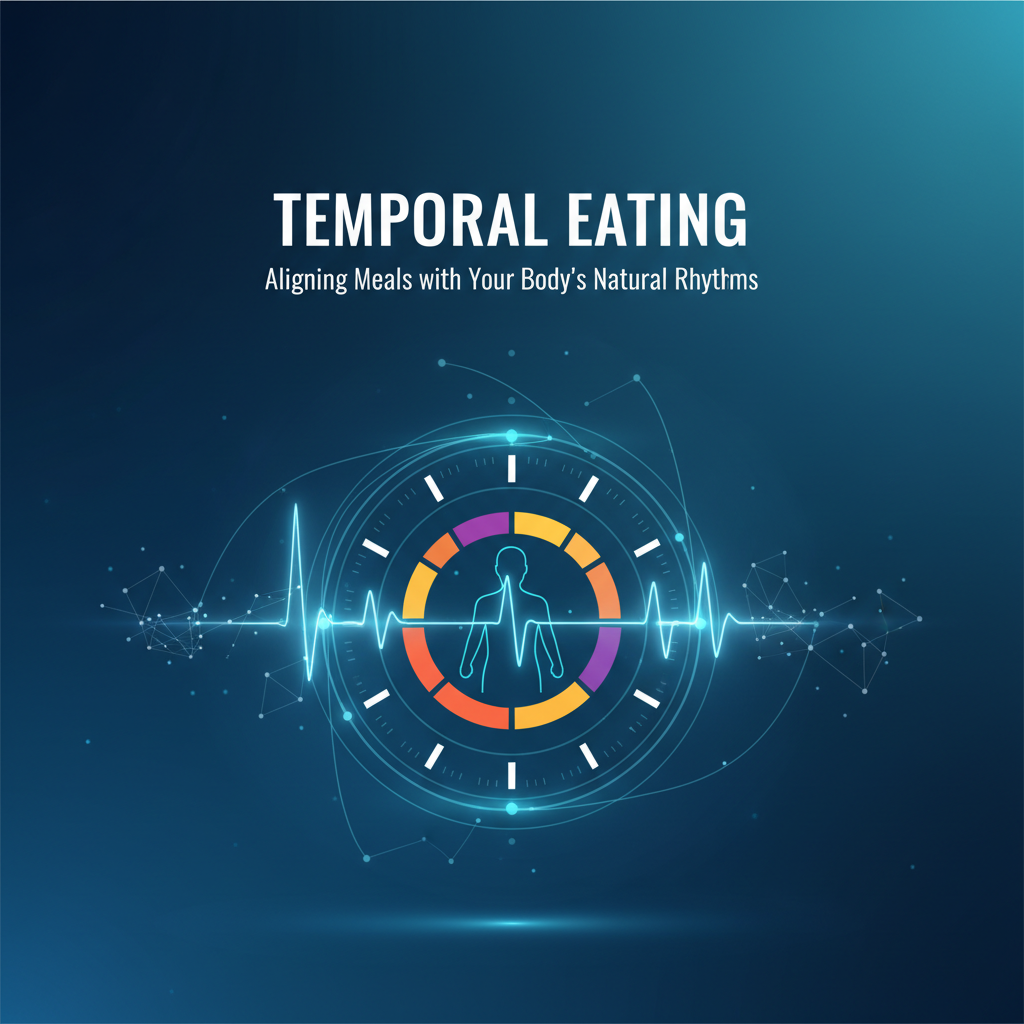
Welcome to the fascinating world of temporal eating, a concept rooted in the intricate dance between our diet and our body's internal clock – the circadian rhythm. This isn't just another diet fad; it's a re-evaluation of our relationship with food, seen through the lens of time itself. By understanding and aligning our eating patterns with our body's natural rhythms, we can unlock a cascade of health benefits, from improved metabolism to better sleep and enhanced longevity.
The Maestro Within: Understanding Your Circadian Rhythm
At the heart of temporal eating lies the circadian rhythm, a roughly 24-hour internal clock that orchestrates a vast array of physiological and behavioral processes in almost all living organisms. From the sleep-wake cycle to hormone secretion, body temperature regulation, and even digestive enzyme production, our circadian rhythm acts as the body's master conductor, ensuring everything happens at the right time.
This internal clock is primarily entrained by external cues, the most powerful being light and darkness. When light hits our retinas, it signals to the suprachiasmatic nucleus (SCN) in the brain – often called the "master clock" – to synchronize the rhythm. But light isn't the only timekeeper. Our feeding times, physical activity, and even social interactions also play crucial roles in reinforcing or disrupting these delicate biological timings.
Interesting Fact: The term "circadian" comes from the Latin circa diem, meaning "around a day." Early experiments in the 18th century, observing the daily leaf movements of plants even in constant darkness, hinted at these internal biological clocks long before their molecular mechanisms were understood.
The Gut's Own Clock: Peripheral Oscillators
While the SCN is the master, almost every organ in our body, including our liver, pancreas, and gut, possesses its own "peripheral clocks." These peripheral clocks are influenced by the master clock but are also directly responsive to cues like nutrient availability. This is where temporal eating truly comes into play. When we eat, the nutrients signal to these peripheral clocks, profoundly impacting their function.
For instance, the liver is programmed to be most efficient at processing nutrients during the day, producing glucose and metabolizing fats. If we introduce a large meal late at night, when the liver's clock is winding down for rest, it has to work against its natural rhythm, leading to less efficient metabolism and potential metabolic stress.
The Science of Timing: Why When Matters
The burgeoning field of chrononutrition is dedicated to exploring the impact of meal timing on health. Research in this area is revealing compelling evidence that consistently eating outside our body's optimal windows can have significant consequences.
Metabolism and Weight Management
One of the most widely studied aspects of temporal eating is its effect on metabolism. Our bodies are designed to be more metabolically active during the day.
- Insulin Sensitivity: Studies show that our insulin sensitivity is higher in the morning and gradually decreases throughout the day. This means that a carbohydrate-rich meal consumed for breakfast will likely be processed more efficiently, with less of an insulin spike, than the same meal consumed late at night. Persistent late-night eating can contribute to insulin resistance, a precursor to type 2 diabetes.
- Thermogenesis: The body's ability to generate heat and burn calories (diet-induced thermogenesis) also peaks earlier in the day. Eating a larger meal in the morning can lead to a greater caloric burn compared to an identical meal consumed in the evening.
- Fat Storage: Eating late at night, particularly high-fat or high-sugar foods, is often associated with increased fat storage. This is partly due to the aforementioned reduced metabolic efficiency and partly because our body's hormonal environment shifts towards energy conservation during the evening hours.
Research Insight: A study published in the International Journal of Obesity found that individuals who ate their main meal earlier in the day lost more weight and had better insulin sensitivity than those who ate it later, even when consuming the same total calories.
Gut Health and Digestion
Our digestive system also operates on a strict schedule. Enzymes, stomach acid production, and gut motility all fluctuate throughout the 24-hour cycle.
- Enzyme Production: Digestive enzyme production is often highest during the day, ensuring efficient breakdown and absorption of nutrients. Eating when these enzymes are less active can lead to indigestion, bloating, and discomfort.
- Gut Microbiome: Emerging research suggests that meal timing can influence the composition and activity of our gut microbiome. Our gut bacteria also exhibit circadian rhythms, and consistently disrupting these rhythms through erratic eating can negatively impact their diversity and function, potentially leading to dysbiosis and associated health issues.
Sleep Quality
There's a bidirectional relationship between food and sleep. What we eat and when we eat can significantly impact the quality of our sleep, and in turn, poor sleep can influence our food choices and metabolic health.
- Late-night Eating and Sleep Disruption: Eating heavy meals close to bedtime can disrupt sleep by causing indigestion, acid reflux, and elevated blood sugar levels. The digestive process itself can keep the body in a more "awake" state, making it harder to fall and stay asleep.
- Hormonal Impact: Meal timing can also affect the production of sleep-regulating hormones like melatonin. Eating too close to bedtime can interfere with melatonin secretion.
Chronic Disease Risk
The cumulative effects of chronically misaligned eating patterns can contribute to an increased risk of several chronic diseases.
- Type 2 Diabetes: As mentioned, repeated insulin resistance due to late-night eating can increase the risk.
- Cardiovascular Disease: Poor metabolic health, increased inflammation, and weight gain associated with erratic eating are all risk factors.
- Obesity: The metabolic inefficiencies of late-night eating make it harder to maintain a healthy weight.
Practical Steps Towards Temporal Eating: Reclaiming Your Rhythm
Adopting temporal eating doesn't require a radical overhaul of your diet. Instead, it's about making conscious choices about when you fuel your body. Here are some practical takeaways:
1. Prioritize an Early Breakfast
Make breakfast your most substantial meal. Aim to eat within 1-2 hours of waking. This kickstarts your metabolism, replenishes glycogen stores, and signals to your peripheral clocks that the "active phase" has begun. Think protein, healthy fats, and complex carbohydrates.
2. Make Lunch Your Midday Fuel
Lunch should be a well-balanced meal that sustains your energy through the afternoon. It can be substantial but perhaps slightly lighter than breakfast for some, depending on activity levels. Try to eat it around midday, allowing several hours between breakfast and lunch.
3. Lighten Up Your Dinner
This is perhaps the most crucial shift for many. Aim for a lighter dinner and consume it several hours before bedtime – ideally 3-4 hours before you plan to sleep. This gives your digestive system ample time to process food before it's time for rest. Focus on lean proteins and non-starchy vegetables.
Example Schedule:
- 7:00 AM: Breakfast
- 12:30 PM: Lunch
- 6:00 PM: Dinner
- 9:00 PM - 10:00 PM: Bedtime
4. Mind the Gap: Extend Your Overnight Fast
One of the most potent aspects of temporal eating is the "eating window" and "fasting window." Aim for an overnight fasting period of at least 12-14 hours. This means if you finish dinner at 7 PM, your breakfast should be no earlier than 7 AM or 9 AM, respectively. This extended fasting period allows your body to switch from a "fed" state to a "fasted" state, promoting cellular repair, fat burning, and metabolic flexibility. This is often referred to as Time-Restricted Eating (TRE).
Interesting Fact: TRE is not a new concept. Historically, humans did not have access to food 24/7. Their eating patterns were naturally restricted by daylight and food availability.
5. Be Mindful of Late-Night Snacking
If you find yourself craving snacks late in the evening, interrogate the reason. Is it true hunger, boredom, stress, or habit? If you must snack, opt for easily digestible, small portions like a handful of nuts, a piece of fruit, or a small plain yogurt. However, the goal is to eliminate late-night eating as much as possible.
6. Stay Hydrated Throughout the Day
While not strictly about eating, adequate hydration supports all bodily functions, including digestion and metabolism, which are inherently tied to our circadian rhythm.
7. Consistency is Key
Our bodies thrive on routine. Try to maintain consistent meal times as much as possible, even on weekends. Erratic eating sends mixed signals to your internal clocks, potentially disrupting them.
8. Listen to Your Body
While general guidelines are helpful, everyone's body is unique. Pay attention to how different meal timings affect your energy levels, digestion, sleep, and overall well-being. Adjust as needed. Are you genuinely hungry in the morning? Do you feel sluggish after a late dinner? Your body provides invaluable feedback.
Who Can Benefit from Temporal Eating?
Almost everyone can benefit from aligning their meals with their circadian rhythm. However, it can be particularly impactful for:
- Individuals struggling with weight management: By optimizing metabolism and reducing late-night calorie intake.
- Those with pre-diabetes or type 2 diabetes: Due to improved insulin sensitivity.
- People experiencing digestive issues: By allowing the digestive system to operate efficiently.
- Anyone seeking to improve sleep quality: By preventing food-related sleep disruptions.
- Shift workers: While challenging, careful planning can help mitigate some of the negative health impacts of working against the natural light-dark cycle.
A Thoughtful Conclusion: Reconnecting with Our Innate Wisdom
Temporal eating is more than just a dietary strategy; it's a re-engagement with our fundamental biology. In a world increasingly disconnected from natural rhythms, consciously choosing when to nourish our bodies offers a powerful path to better health. It's about respecting the ancient wisdom encoded within our cells, allowing our internal clocks to guide our choices, and experiencing the profound benefits that arise when we work with our bodies, not against them.
By making simple, consistent shifts in our meal timings, we can optimize our metabolism, enhance our digestion, improve our sleep, and potentially stave off chronic diseases. So, the next time you reach for that late-night snack, pause and consider the time. Your body's internal clock is listening, and aligning with its rhythm might just be the key to unlocking a healthier, more vibrant you. Let time be your guide, and let your plate reflect the natural flow of your day.
Make Every Second Count
Inspired by this article? Take action now! Create a custom timer to help you manage your time better and reach your goals.
Create Your TimerAbout Dominic Mueller
Dominic Mueller is a German director for television and film with a deep fascination for time and time measurement. When he's not behind the camera crafting compelling visual stories, he explores the intricate world of temporal perception and timekeeping. Based in the beautiful city of Cologne, Germany, Dominic shares his life with his girlfriend and their beloved dog, Nala, finding inspiration in both the precise mechanics of time and the fleeting moments that make life meaningful.