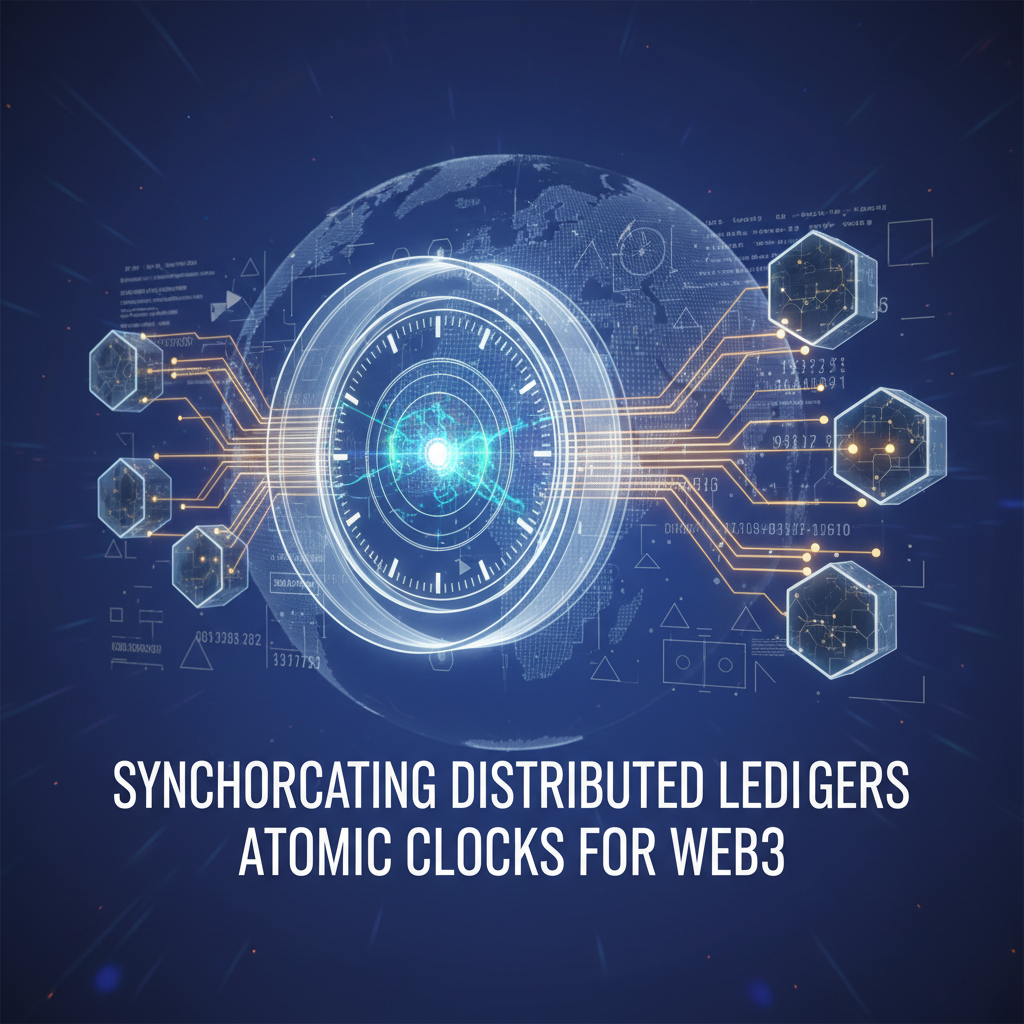
Synchronizing Distributed Ledgers: Atomic Clocks for Web3
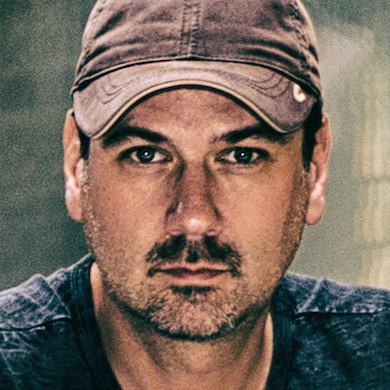 Dominic Mueller
Taming Time's Chaos: Atomic Clocks for a Synchronized Web3
Imagine a vast digital universe, constantly expanding, where every transaction, every interaction, every piece of data needs to be meticulously ordered. This is the promise of Web3 – a decentralized, trustless, and transparent internet built on the bedrock of distributed ledgers. But what if the very foundation upon which this universe is built, the precise ordering of events, is subject to the whims of imprecision? What if time itself becomes a chaotic element, threatening the integrity and efficiency of our digital future?
This isn't a hypothetical fear; it's a fundamental challenge for distributed systems, especially the intricate architecture of Web3. While the promise of decentralized ledgers is immense, achieving true consensus and preventing malicious attacks hinges on a universal agreement on the sequence of events. And that, dear reader, is where the ancient, yet cutting-edge, science of precise timekeeping steps in. Welcome to the fascinating intersection of atomic clocks and the future of the internet.
The Temporal Tightrope: Why Time Matters So Much in Web3
At its core, a distributed ledger technology (DLT) like a blockchain is an immutable, append-only record of transactions. Every "block" contains a timestamp, a unique identifier, and a reference to the previous block, forming an unbreakable chain. The order in which these blocks are added is paramount.
Consider a simple scenario: two transactions occurring almost simultaneously. If Node A records Transaction X before Node B records Transaction Y, but Node B believes Y happened first, you have a disagreement. In a financial context, this could lead to double-spending – the same funds being spent twice – or a fork in the ledger, where different participants have different versions of the truth. These are existential threats to the reliability and trustworthiness of any decentralized network.
The Problem of Skew: In the real world, no two computer clocks are perfectly in sync. Even state-of-the-art server clocks, often synchronized using protocols like NTP (Network Time Protocol), can drift by tens or hundreds of milliseconds. Over a global network with thousands or millions of nodes, these tiny discrepancies can accumulate into significant "clock skew." This skew creates ambiguity:
- Consensus Vulnerabilities: Many consensus mechanisms, like Proof-of-Stake or certain BFT (Byzantine Fault Tolerance) algorithms, rely on nodes agreeing on event order. Clock skew can make it impossible for nodes to determine which transaction or block proposal truly came first, leading to delays, wasted computational resources, and potential forks.
- Transaction Ordering Attacks: In blockchain networks, the order of transactions within a block can be exploited. If an attacker can manipulate their local clock or the perceived network time, they might be able to front-run legitimate transactions (e.g., in decentralized finance, or DeFi) or influence block propagation.
- Liveness and Safety: The ability of a network to continually process transactions (liveness) and ensure all honest nodes agree on the same state (safety) is directly impacted by timing. Significant clock discrepancies can halt progress or split the network.
- Latency and Throughput: Even minor delays in timestamping and block propagation, exacerbated by clock skew, can limit a network's overall transaction capacity (throughput) and increase confirmation times.
The current approaches often involve complex algorithms that tolerate clock skew rather than eliminate it. This tolerance comes at a cost: reduced performance, increased complexity, and sometimes, a sacrifice of true decentralization as a few "trusted" nodes might implicitly dictate time.
The Maestros of Time: What Are Atomic Clocks?
Before we dive into their Web3 application, let's appreciate the marvel that is an atomic clock. Unlike traditional clocks that rely on mechanical or electronic oscillations, atomic clocks leverage the incredibly precise and stable atomic transitions of specific elements.
A Brief History of Precision:
- 1949: The U.S. National Bureau of Standards (NBS, now NIST) builds the first atomic clock based on ammonia.
- 1955: Louis Essen and John Parry at the UK's National Physical Laboratory (NPL) develop the first accurate caesium-133 atomic clock. This clock was so precise it could define the second.
- 1967: The second is formally redefined by the International System of Units (SI) based on the frequency of a specific transition of the caesium-133 atom. Specifically, it's defined as the duration of 9,192,631,770 periods of the radiation corresponding to the transition between the two hyperfine levels of the ground state of the caesium-133 atom.
How They Work (Simplified): Imagine an atom (like caesium-133) in a precisely controlled environment. When it absorbs or emits electromagnetic radiation at a specific frequency, it jumps between different energy levels. This "resonant frequency" is incredibly stable and unique to that atom. Atomic clocks essentially count these oscillations.
- Microwave Cavity: Caesium atoms are passed through a microwave cavity, where they interact with microwaves.
- Resonator: A quartz crystal oscillator provides the initial, albeit less stable, frequency.
- Feedback Loop: A detector measures how many atoms have changed energy states. This signal is fed back to adjust the quartz oscillator's frequency until it perfectly matches the atomic resonance. This "locks" the quartz oscillator to the atom's highly stable frequency.
- Counter: The stabilized frequency is then divided down to produce ticks, which a counter translates into seconds, minutes, and hours.
Unprecedented Accuracy: Modern atomic clocks, especially optical lattice clocks, can be accurate to within a second in hundreds of billions of years. To put that in perspective, if an atomic clock had been running since the Big Bang, it would still be accurate to within less than a second today. While the atomic clocks used for practical network synchronization aren't quite at this bleeding edge, they are still orders of magnitude more precise than typical computer clocks.
The Atomic Embrace: How Atomic Clocks Can Elevate Web3
Bringing atomic-level precision to distributed ledgers isn't about simply having a better clock; it's about fundamentally changing how nodes perceive and agree upon time.
1. Eliminating Clock Skew and Achieving Global Time Consensus: The primary benefit is the dramatic reduction, if not near elimination, of clock skew. If every node in a Web3 network could synchronize to a common, highly precise time source (like an atomic clock signal), then the ambiguity surrounding transaction ordering would vanish.
- Atomic Time Stamping: Transactions could be stamped with truly global, cryptographically verifiable timestamps derived from atomic clocks. This provides an irrefutable "happened-before" relationship.
- Deterministic Ordering: With atomic precision, conflicts over which transaction arrived first become trivial to resolve. The one with the earlier, verifiable atomic timestamp wins. This simplifies consensus algorithms, making them more efficient and robust.
2. Enhancing Security and Preventing Attacks: Precise timing acts as a strong deterrent against various attacks:
- Mitigating Double-Spending: If two conflicting transactions claim to spend the same funds, the one with the earlier atomic timestamp is clearly valid, rendering the other invalid. This strengthens the integrity of the ledger.
- Preventing Front-Running: In high-frequency trading or DeFi, front-running attacks often exploit subtle timing advantages. Atomic timestamps make it nearly impossible for an attacker to reliably insert their transaction ahead of a legitimate one by manipulating perceived time.
- Robustness Against Sybil Attacks: While not a complete solution, precise timing makes it harder for a malicious actor to create many fake identities and confuse the network's understanding of event order through clock manipulation.
3. Boosting Performance and Scalability: By reducing the need for complex, resource-intensive algorithms to tolerate skew, networks can become more efficient.
- Faster Consensus: When nodes don't have to spend time debating "who was first," consensus can be reached much faster. This directly translates to higher transaction throughput.
- Reduced Latency: Blocks can be propagated and validated more quickly, leading to faster transaction confirmations and a smoother user experience.
- Simpler Protocol Design: The underlying protocols can be simplified, reducing the attack surface and making them easier to audit and maintain.
- Enabling New Architectures: The guarantee of global, synchronized time opens the door for novel consensus mechanisms and sharding solutions that might be impractical or insecure without such precision.
4. Enabling Cross-Chain Interoperability: As Web3 evolves, cross-chain communication and asset transfers become crucial. Synchronizing time across different blockchains, each potentially with its own consensus mechanism and timing assumptions, is a monumental challenge. A universally accessible, atomic time source could provide a shared temporal reference point, greatly facilitating secure and reliable interoperability.
5. Building "Temporal Oracles": Just as price oracles bring real-world data to smart contracts, "temporal oracles" could bring highly precise, verifiable timestamps. Smart contracts could then execute based on exact, provable moments in time, enabling new applications in areas like complex derivatives, automated legal agreements, or even synchronized real-time gaming on the blockchain.
Practical Approaches: Bringing Atomic Clocks to Web3 Nodes
Directly attaching an atomic clock to every laptop or server is impractical for most Web3 participants. However, several strategies can leverage atomic precision for distributed ledgers:
1. Network Time Protocols with Atomic Clock Roots (NTP/PTP with Hardware Support): The most common approach is to improve existing network time protocols. NTP (Network Time Protocol) is widely used, but its accuracy is limited by network latency and software processing. PTP (Precision Time Protocol, IEEE 1588) offers much higher precision (often sub-microsecond) over local area networks, especially with hardware timestamping.
- How it helps: Core Web3 infrastructure providers (e.g., node operators, data centers) can equip their servers with specialized PTP hardware cards and synchronize them to highly stable stratum 0/1 NTP servers, which in turn are disciplined by atomic clocks (like those maintained by NIST or national metrology institutes) or GPS signals.
- Challenges: PTP's accuracy degrades over wide-area networks. Software-based NTP still suffers from variability. Verifying the integrity of the time source remains a challenge for truly trustless systems.
2. Distributed Time Servers and Atomic Clocks as Reference: A more robust approach might involve a network of highly secure, geographically distributed time servers, each equipped with its own atomic clock (or a direct feed from a national atomic clock source). These servers could then broadcast cryptographically signed time signals to Web3 nodes.
- How it helps: Nodes could query multiple such time servers, verify the cryptographic signatures, and achieve a robust, fault-tolerant consensus on the current atomic time. This minimizes reliance on a single point of failure.
- Research & Projects: Initiatives like NIST's Internet Time Service or companies offering "Time-as-a-Service" are already providing access to highly accurate time. Projects could build on this by decentralizing the access points and cryptographically securing the time data.
3. Blockchain-Native Time Proofs (e.g., Algorand's Approach): Some blockchains, like Algorand, have incorporated timing into their core design. Algorand uses a concept called "Verifiable Random Functions" (VRFs) which select block proposers pseudo-randomly. While not directly using atomic clocks, their approach to finality and rapid block production implicitly benefits from well-synchronized nodes.
- Future Integration: A blockchain could integrate a mechanism to periodically poll external atomic clock sources, cryptographically verify the timestamps, and then record these "proofs of time" onto the ledger. Subsequent blocks or transactions could then reference these on-chain time proofs, adding an extra layer of verifiable temporal integrity.
4. Leveraging Satellite Navigation Systems (GNSS - GPS, Galileo, etc.): Global Navigation Satellite Systems (GNSS) like GPS aren't just for location; they broadcast incredibly precise time signals derived from on-board atomic clocks. GPS receivers can achieve nanosecond-level accuracy.
- How it helps: Web3 nodes could be equipped with GNSS receivers to synchronize their local clocks directly to these satellite-borne atomic clocks. This provides a decentralized, globally accessible, and highly accurate time source.
- Challenges: GNSS signals can be jammed or spoofed, and receivers require a clear view of the sky. This might not be suitable for all data center environments. However, multi-constellation receivers and robust authentication protocols can mitigate some of these risks.
The Road Ahead: Challenges and the Future
While the promise is clear, integrating atomic clocks into Web3 faces challenges:
- Cost and Accessibility: Dedicated atomic clock hardware is expensive and not feasible for every participant in a decentralized network. The solution needs to be layered, with high-precision sources disciplining lower-precision, more accessible ones.
- Trust and Verifiability: How do nodes trust that a reported atomic timestamp is genuine and hasn't been tampered with? Cryptographic proofs and redundancy from multiple independent sources are crucial.
- Network Latency: Even with perfect clocks, the speed of light still limits how quickly information (and time signals) can travel across a global network. This introduces unavoidable propagation delays.
- Decentralization vs. Centralized Time Sources: Relying on national metrology institutes or specific satellite constellations might feel counter to the decentralized ethos of Web3. The ideal solution would be a distributed, resilient network of atomic time sources.
- Quantum Computing: The long-term threat of quantum computers to existing cryptographic primitives also extends to time signature mechanisms. Future solutions will need to be quantum-resistant.
Despite these hurdles, the drive for ever-greater precision in Web3 is undeniable. Research is ongoing in areas like:
- Quantum Clocks: The next generation of atomic clocks, such as optical lattice clocks, promise even greater accuracy, potentially pushing into the attosecond range.
- Gravitational Time Dilation: For truly extreme precision, even the effects of gravity on time (as predicted by Einstein's relativity) become relevant. While not impacting current Web3 architectures, it highlights the scientific frontier.
- Blockchain-Specific Time Synchronization Protocols: New consensus algorithms and time protocols designed specifically for distributed ledgers, potentially incorporating hardware-level time synchronization, are likely to emerge.
The future of Web3 is not just about faster transactions or more sophisticated smart contracts; it's about building an internet where the very fabric of reality—time itself—is understood and agreed upon with unprecedented accuracy.
Thoughtful Conclusion: The Symphony of Synchronization
The quest for perfectly synchronized time in distributed systems is an age-old challenge, amplified exponentially by the demands of Web3. From the humble quartz crystal to the oscillating atoms of caesium, humanity has continually pushed the boundaries of timekeeping precision. Now, this ancient scientific pursuit is poised to become a cornerstone of our digital future.
Imagine a Web3 where every transaction, every block, every interaction is timestamped with atomic precision, making it impervious to temporal manipulation. A world where double-spending is a relic of the past, front-running is obsolete, and consensus is reached with deterministic certainty. This isn't just about efficiency; it's about establishing an unshakable foundation of trust and verifiable truth in a decentralized world.
Atomic clocks, once confined to scientific laboratories and national observatories, are now hinting at their crucial role in orchestrating the grand symphony of Web3. By taming time's chaos, these silent maestros of precision will help us build a more robust, secure, and truly synchronized internet – an internet where the past is immutable, the present is clear, and the future is built on a bedrock of temporal truth. The journey to a perfectly timed Web3 is challenging, but the prize – an internet of unprecedented integrity and performance – is well worth the pursuit.
Make Every Second Count
Inspired by this article? Take action now! Create a custom timer to help you manage your time better and reach your goals.
Create Your TimerAbout Dominic Mueller
Dominic Mueller is a German director for television and film with a deep fascination for time and time measurement. When he's not behind the camera crafting compelling visual stories, he explores the intricate world of temporal perception and timekeeping. Based in the beautiful city of Cologne, Germany, Dominic shares his life with his girlfriend and their beloved dog, Nala, finding inspiration in both the precise mechanics of time and the fleeting moments that make life meaningful.