Algorithmic Time: When AI Schedules Our Lives
 Dominic Mueller
Algorithmic Time: When AI Schedules Our Lives
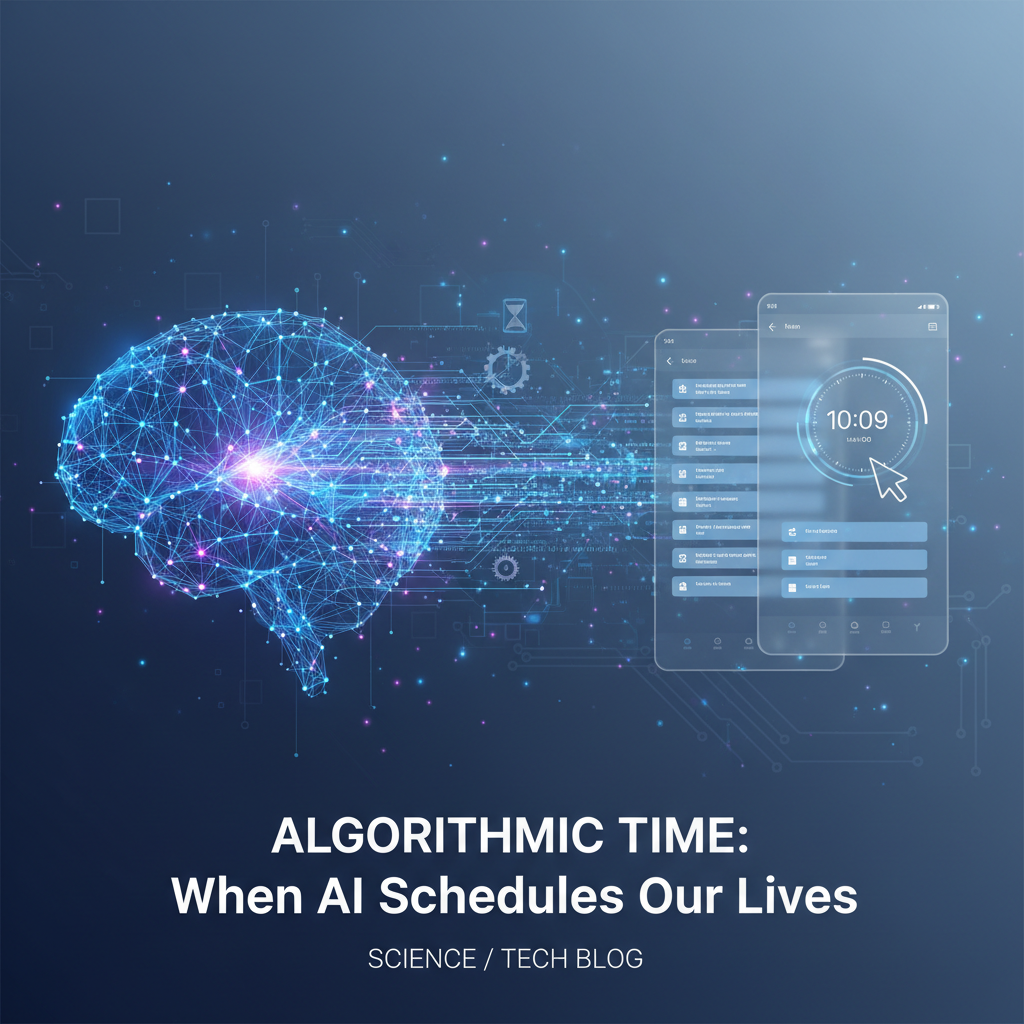
Tick-tock, goes the clock. A rhythm as old as time itself, once dictated by the sun's arc, the moon's phases, and the simple pulse of human needs. But what if the next tick-tock isn't quite so natural? What if it's a meticulously calculated, hyper-optimized beat orchestrated by artificial intelligence? Welcome to the era of algorithmic time, a future where AI isn't just a tool, but increasingly, the master scheduler, shaping our days, our work, our leisure, and even our most intimate moments.
The concept might sound like science fiction, yet the seeds of algorithmic time are already deeply sown in our daily routines. From the navigation app that shaves minutes off your commute to the streaming service that curates your evening entertainment, AI is constantly making decisions about how we spend our most precious resource: time. This isn't just about convenience; it's a fundamental shift in our relationship with temporality, prompting us to examine both the immense potential and the profound implications of entrusting our schedules, and ultimately our lives, to algorithms.
The Dawn of Algorithmic Scheduling: From Efficiency to Optimization
The roots of algorithmic scheduling aren't new. Think back to early computer programs designed to optimize factory floor production or logistical supply chains. These were rudimentary algorithms, focused on maximizing efficiency within clearly defined parameters. However, with the advent of machine learning, big data, and powerful computational capabilities, the scope and sophistication of these algorithms have exploded.
Today, AI-powered schedulers are not just about finding the shortest path or the quickest sequence. They are about optimization in a far more complex sense, considering a multitude of variables to achieve a desired outcome. This often means optimizing for:
- Productivity: Maximizing output in a given timeframe, whether for a solitary worker or an entire enterprise.
- Customer Satisfaction: Ensuring timely delivery of services or products, often measured in millisecond responsiveness.
- Resource Allocation: Distributing limited resources (human, material, financial) across competing demands to achieve overall goals.
- Personal Well-being (aspiringly): Crafting schedules that balance work, rest, and personal pursuits, sometimes even with an eye towards mental health.
The key difference now is the ability of AI to learn, adapt, and predict. Unlike static rule-based systems, modern AI schedulers analyze vast amounts of data, identify patterns, and continuously refine their models. This makes them incredibly powerful, but also opaque and sometimes unpredictable.
Where Algorithms Control the Clock
Let's delve into some practical examples where algorithmic time is already a significant force, reshaping how we experience and manage our daily temporal existence.
The Workplace: Micro-Management by Algorithm
Perhaps nowhere is algorithmic time more evident and impactful than in the modern workplace. Many companies are deploying sophisticated AI systems to manage employee schedules, tasks, and performance.
- Gig Economy: For drivers, delivery personnel, and freelance workers, algorithms dictate when "peak hours" are, where to go, and how much to earn. Workers often find themselves chasing algorithmically generated demand surges, their income directly tied to their ability to respond to instant, often unpredictable, algorithmic directives. This creates a highly reactive work life, where future planning becomes difficult. A study by the Oxford Internet Institute found that 70% of gig workers feel they have little to no control over their working hours.
- Retail and Logistics: AI models predict customer demand down to the hour, optimizing staffing levels in retail stores or warehouse operations. Employees might find their shifts adjusted at short notice, or be subjected to "on-call" scheduling, always awaiting the algorithmic cue.
- Knowledge Work: Even in white-collar professions, AI tools are used for project management, task prioritization, and meeting scheduling. While often presented as tools for enhancing productivity, they can subtly nudge workers towards specific tasks or deadlines, influencing workflow and the pace of work. Think of email clients that suggest "focus modes" or project software that highlights "critical path" tasks.
Insight: While these systems aim for efficiency, they can lead to increased stress, burnout, and a feeling of being constantly monitored and controlled. The "human element" of flexibility and autonomy can be eroded, replacing human intuition with algorithmic imperative.
Our Personal Lives: The Invisible Hand of Smart Scheduling
Beyond work, AI is increasingly infiltrating our personal schedules, often under the guise of convenience and personalization.
- Smart Home Ecosystems: Your smart thermostat learns your routines, adjusting temperature before you arrive home. Your smart lighting system might mimic sunrise to wake you gently. These are subtle forms of algorithmic scheduling, orchestrating elements of your environment based on predicted needs and preferences.
- Entertainment and Content Consumption: Streaming services don't just recommend what to watch; they subtly influence when you watch. Their algorithms are designed to maximize engagement, offering a continuous stream of content, making it easy to lose track of time. The "autoplay" feature is a prime example of an algorithmic nudge designed to extend your viewing session.
- Health and Wellness Apps: From fitness trackers that prompt you to move at specific intervals to meditation apps that schedule your mindful moments, AI is trying to optimize your personal well-being timeline. It suggests ideal sleep patterns, workout durations, and even meal times based on collected data.
- Navigation and Travel: Real-time traffic algorithms recalculate routes, suggesting detours that save minutes. While beneficial for individual journeys, imagine this scaled up: an algorithmic traffic management system optimizing traffic flow across an entire city, subtly influencing the collective experience of travel time for millions.
Fact: Research by the University of Chicago found that people tend to underestimate the time they spend on apps and devices where algorithms are actively curating their experience, leading to a distorted sense of their own time allocation.
The Advantages: Time Saved, Efficiency Gained
It's easy to focus on the dystopian aspects, but it's crucial to acknowledge the genuine benefits that algorithmic time brings.
- Enhanced Efficiency: For complex systems, AI can achieve levels of optimization far beyond human capacity. Think of coordinating thousands of flights, managing intricate supply chains, or optimizing energy grids. This saves vast amounts of time and resources.
- Personalization and Convenience: For individuals, algorithmic scheduling can streamline routines, reduce cognitive load, and offer personalized experiences. Imagine an AI assistant that seamlessly manages your calendar, books appointments, and even anticipates your needs. This frees up mental bandwidth for more creative or meaningful pursuits.
- Reduced Waiting Times: Algorithms can optimize queues, forecast demand, and allocate resources to minimize waiting times in hospitals, customer service, or transportation hubs.
- Resource Optimization: From energy consumption to human labor, AI can help allocate resources more intelligently, reducing waste and improving sustainability.
Takeaway: The goal of algorithmic time, in its ideal form, is to create more "free" time by optimizing the mundane and predictable, allowing humans to focus on the unique, the creative, and the truly human.
The Perils: Loss of Autonomy, Algorithmic Bias, and Time Poverty
However, the promises of algorithmic efficiency come with significant caveats, especially concerning control over our own temporal existence.
Erosion of Temporal Autonomy
The most significant risk is the gradual erosion of individual and collective autonomy over time. When algorithms dictate our schedules, we risk becoming reactive rather than proactive.
- Work-Life Blur: Constant algorithmic availability expectations can blur the lines between work and personal life, leading to an "always-on" culture.
- Loss of Spontaneity: Over-optimized schedules can leave little room for serendipity, spontaneous decisions, or the unexpected joys that break routine.
- Feeling of Being Managed: A constant sense of being managed by an invisible, impersonal system can be dehumanizing and lead to feelings of powerlessness.
Algorithmic Bias and Inequality
Algorithms are trained on historical data, which often reflects existing societal biases. If an algorithm is designed to optimize for "productivity" based on data from a historically inequitable system, it can perpetuate that inequity.
- Skewed Opportunities: Scheduling algorithms could inadvertently favor certain demographics or penalize others, leading to unequal access to desirable shifts, projects, or promotions.
- "Time Poverty" Amplification: For those already struggling with time poverty (e.g., single parents, low-wage workers), algorithmic scheduling, with its demand for flexibility and short-notice changes, can exacerbate existing challenges, making it harder to balance responsibilities.
The "Black Box" Problem
Many advanced algorithms operate as "black boxes"—their decision-making processes are so complex that even their designers can't fully explain why a particular outcome was reached.
- Lack of Recourse: If an algorithmic schedule is unfair or suboptimal, challenging it becomes difficult without understanding its underlying logic.
- Trust Deficit: The inability to understand or appeal against algorithmic decisions can lead to a fundamental distrust of the systems that govern our time.
Research Fact: A study published in Nature Human Behaviour found that even small algorithmic nudges in scheduling can significantly impact individual well-being and job satisfaction, highlighting the hidden power of these systems.
Reclaiming Our Time: Navigating the Algorithmic Future
As algorithmic time becomes more pervasive, the critical question isn't how to stop it, but how to shape it for the betterment of humanity. How do we ensure that AI serves as an enabler of time, rather than its master?
1. Demanding Transparency and Explainability
We need algorithms that are not just efficient but also transparent. Regulators, developers, and users must advocate for systems that can explain why a particular schedule was chosen and what parameters were prioritized. This allows for audits, fairness checks, and the ability to challenge decisions.
2. Prioritizing Human Values and Well-being
Algorithm design should move beyond pure efficiency metrics to incorporate human-centric values. This means factoring in:
- Autonomy: Designing systems that offer meaningful choices and control to individuals, rather than rigid dictates.
- Flexibility: Allowing for adjustments, breaks, and personal needs within automated schedules.
- Equity: Actively designing algorithms to mitigate bias and promote fair access to opportunities.
- Right to Disconnect: Building in mechanisms that protect individuals from an "always-on" algorithmic expectation.
3. Fostering Algorithmic Literacy
As individuals, we need to understand how algorithms influence our time. This "algorithmic literacy" includes:
- Awareness: Knowing which aspects of our lives are being scheduled by AI.
- Critical Thinking: Questioning algorithmic recommendations and understanding their underlying goals (e.g., "Is this streaming recommendation genuinely for me, or is it just trying to maximize my screen time?").
- Mindful Engagement: Purposefully setting boundaries with AI-driven products and services to protect our attention and time.
4. Designing for "Human-in-the-Loop"
Instead of fully autonomous algorithmic scheduling, many systems should be designed with a "human-in-the-loop," where AI proposes solutions, but humans retain the ultimate decision-making power and the ability to override. This blends the efficiency of AI with human judgment and empathy.
Practical Takeaway: Regularly audit your own digital habits. Which apps and services are subtly dictating your schedule? Can you adjust settings to regain more control? Consider scheduling "unstructured" time explicitly in your calendar, free from algorithmic influence.
Conclusion: The Art of Living in Algorithmic Time
Algorithmic time is here to stay, and its influence will only deepen. We stand at a critical juncture, much like our ancestors did with the invention of the mechanical clock, which standardized time and fundamentally reshaped society. The challenge now is to ensure that this new temporal regime serves humanity, rather than enslaving us to an unfeeling logic of optimized efficiency.
The future of time is not just about faster processors or smarter algorithms; it's about a philosophical renegotiation of our relationship with temporality itself. Will we passively accept the dictates of the algorithmic clock, or will we actively shape its chimes to resonate with our deepest human needs for autonomy, connection, and purposeful living? The answer depends on our collective vigilance, our ethical considerations, and our commitment to ensuring that even as AI schedules our lives, the art of living remains firmly in human hands. The clock is ticking—it's time to decide.
Make Every Second Count
Inspired by this article? Take action now! Create a custom timer to help you manage your time better and reach your goals.
Create Your TimerAbout Dominic Mueller
Dominic Mueller is a German director for television and film with a deep fascination for time and time measurement. When he's not behind the camera crafting compelling visual stories, he explores the intricate world of temporal perception and timekeeping. Based in the beautiful city of Cologne, Germany, Dominic shares his life with his girlfriend and their beloved dog, Nala, finding inspiration in both the precise mechanics of time and the fleeting moments that make life meaningful.