
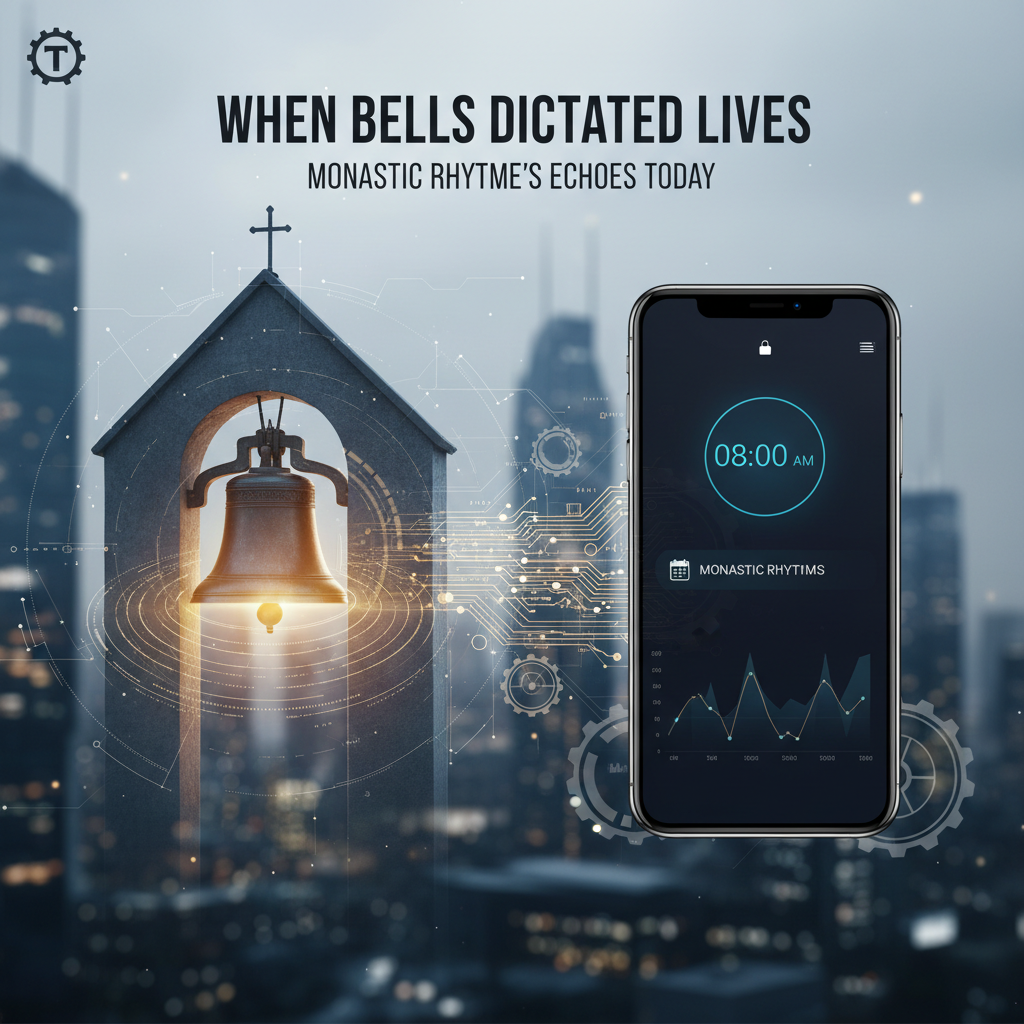
When Bells Dictated Lives: Monastic Time's Echoes Today
 Dominic Mueller
When Bells Dictated Lives: Monastic Time's Echoes Today
In an age dominated by atomic clocks, digital calendars, and the relentless ping of notifications, it's almost impossible to imagine a world where the passage of time was marked not by glowing screens, but by the solemn, rhythmic toll of bells. Yet, for centuries, this was precisely how life unfolded for millions. From bustling market towns to quiet villages, the cadence of the bell tower was the invisible hand that orchestrated daily existence. But nowhere was this more profound, more meticulously structured, than within the hallowed walls of the monastery.
The monastic world was a universe built on time. It was a discipline, a devotion, and a way of life intricately woven with the ticking (or rather, ringing) of every hour. These communities, dedicated to prayer, study, and manual labor, developed a sophisticated system of timekeeping that transcended mere functionality, becoming a spiritual roadmap. Today, as we grapple with the frenetic pace of modern life and the elusive quest for balance, the echoes of monastic time offer surprising insights and practical wisdom for our hyper-connected world.
The Dawn of Sacred Rhythms: Monasticism's Temporal Foundation
Long before the advent of mechanical clocks, and even before the widespread use of sundials, early monastic communities recognized the profound importance of structuring their days. The foundational texts of monasticism, particularly the Rule of Saint Benedict, written around 540 AD, laid out a meticulously detailed schedule for monks. This wasn't just about efficiency; it was about sanctifying time, dedicating every waking hour (and even some sleeping ones) to the glory of God.
The Divine Office: A Symphony of Prayer and Time
At the heart of monastic timekeeping was the Divine Office, also known as the Liturgy of the Hours. This was a cycle of prayer services performed at specific intervals throughout the day and night. Each service, called a "canonical hour," had a distinct purpose and character, dictated by the time of day it was observed.
Here's a breakdown of the traditional canonical hours:
- Vigils (Matins): Often in the middle of the night (2-3 AM), a period of intense prayer, scripture reading, and contemplation.
- Lauds (Morning Prayer): At dawn, welcoming the new day with praise and hymns.
- Prime (First Hour): Around 6 AM, marking the start of the working day.
- Terce (Third Hour): Around 9 AM, symbolizing the descent of the Holy Spirit at Pentecost.
- Sext (Sixth Hour): At noon, a mid-day pause for prayer.
- None (Ninth Hour): Around 3 PM, commemorating Christ's death on the cross.
- Vespers (Evening Prayer): At sunset, a time for thanksgiving and reflection.
- Compline (Night Prayer): Before bed, a final prayer for protection through the night.
These hours weren't arbitrary. They were designed to punctuate the day with spiritual anchors, reminding the monks of their constant devotion. The entire community would rise, pray, work, eat, and sleep in unison, their lives synchronized by the bell that called them to each service.
The Bell: The Unsung Metronome of Medieval Europe
While the canonical hours were the blueprint, the bell was the instrument that brought them to life. Before mechanical clocks became common in the late Middle Ages, church bells were the primary means of signaling time across entire communities.
- Fact: The earliest bells used in monasteries were relatively small handbells, but by the 7th century, larger, fixed bells began to appear. By the 10th century, bellfounding was a sophisticated art, and large bells were common features of monastic and parish churches.
The bell served multiple functions:
- Temporal Marker: It announced the canonical hours, calling monks to prayer.
- Community Communicator: Beyond the monastery walls, it signaled dangers, celebrated victories, and marked the start and end of the working day for laypeople.
- Spiritual Symbol: Its sound was often seen as the voice of God, a call to repentance, or a reminder of heavenly matters.
The bell-ringer held a significant position, requiring precision and a deep understanding of the monastic schedule. Missing a cue could disrupt the entire temporal fabric of the community.
The Challenge of Early Timekeeping: Adapting to Nature's Clock
It's crucial to remember that early monastic time was not fixed to precise, 60-minute hours as we understand them. Before mechanical clocks, time was often measured by natural phenomena:
- Daylight Hours: The period between sunrise and sunset was divided into a set number of "hours" (typically 12). This meant that an "hour" in summer was much longer than an "hour" in winter.
- Water Clocks (Clepsydra): These ancient devices used the steady flow of water to measure intervals. Monks would use these to time prayer services, especially during the night or on cloudy days when sundials were useless.
- Candle Clocks: Marked candles were burned, and the wax consumed indicated the passage of time. King Alfred the Great is famously said to have used these in 9th-century England.
- Sundials: Simple and effective in daylight, but limited by weather and darkness.
This meant that the monastic schedule, while structured, was also remarkably adaptable. The Rule of Benedict allowed for variations in prayer times and work schedules based on the seasons, ensuring that monks had enough daylight for labor and enough darkness for rest, while still maintaining the integrity of the Divine Office. This inherent flexibility, despite the rigorous structure, is a fascinating aspect of their temporal discipline.
Monastic Time's Legacy: Shaping Society Beyond the Cloister
The influence of monastic time extended far beyond the monastery walls, subtly shaping the very fabric of medieval European society.
- The Origin of Work Schedules: The monastic divisions of the day – particularly Prime, Terce, Sext, and None – seeped into the secular world. The concept of regular work breaks and fixed times for meals can be traced back to this structured rhythm.
- Early Public Clocks: When mechanical clocks began to appear in the late 13th and 14th centuries, often built in cathedrals and monasteries, their primary purpose was to accurately strike the canonical hours. These large public clocks became the foundation for standardized public time, moving society away from variable "hours" to fixed, equal-length hours.
- The Discipline of Punctuality: While not as rigid as modern punctuality, the monastic emphasis on being present for prayers at the appointed time fostered an early appreciation for timing and communal synchronization.
- The Value of Routine: The monastic insistence on routine, on the systematic allocation of time for different activities, demonstrated the power of structure in achieving goals, whether spiritual or practical.
- Fact: The word "clock" itself comes from the medieval Latin clocca, meaning "bell." For centuries, a clock wasn't primarily a dial with hands; it was a mechanism that struck a bell to announce the hour.
Echoes Today: Monastic Time in a Modern World
In our perpetually connected, always-on society, the concept of monastic time might seem utterly alien. Yet, its core principles offer profound lessons for navigating the challenges of modern life.
1. The Power of Rhythms and Rituals
We are constantly bombarded with stimuli, leading to fragmented attention and a sense of overwhelm. Monastic life, by contrast, was defined by predictable rhythms. The canonical hours weren't just about prayer; they were ritualized pauses that broke the day into manageable, meaningful segments.
Takeaway: Introduce intentional rituals into your day. This could be a morning meditation, a midday walk, a dedicated "no-screen" hour in the evening, or a family dinner at a set time. These rituals act as mental and emotional anchors, bringing structure and peace to your day.
2. Deep Work and Focused Attention
Monks often engaged in ora et labora (prayer and work), alternating between intense spiritual practice and manual labor. When they worked, they worked with focused attention, undistracted by external stimuli.
Takeaway: Embrace periods of "deep work." Schedule blocks of uninterrupted time for tasks that require intense concentration. Turn off notifications, close unnecessary tabs, and dedicate yourself fully to one task, much like a monk copying a manuscript or tending a garden.
3. Deliberate Disconnection
The monastic world was inherently disconnected from the constant chatter of the outside world. This allowed for introspection, contemplation, and a deeper connection to their spiritual purpose.
Takeaway: Practice deliberate disconnection. Schedule "digital sabbaths" or "no-tech zones" in your home. Allow yourself moments of silence, free from the demands of your phone or computer. This isn't about avoiding technology entirely, but about using it mindfully and intentionally.
4. Seasonal Adaptability
While structured, the monastic schedule was also seasonally adaptive, recognizing the natural cycles of light and darkness. They didn't fight nature; they worked with it.
Takeaway: Tune into your body's natural rhythms. Are you more productive in the morning? Do you need more rest in winter? Don't rigidly force yourself into a schedule that goes against your innate biology. Allow for flexibility and self-compassion.
5. Community and Shared Time
Monastic life was communal. Everyone moved to the same bell, participated in the same prayers, and shared meals together. This fostered a strong sense of belonging and shared purpose.
Takeaway: Prioritize shared time with loved ones. In our individualistic society, we often find ourselves isolated. Create opportunities for collective experiences – family meals, group activities, or shared hobbies – that foster connection and synchronize your personal rhythms with those important to you.
The Enduring Allure of Structured Time
The bells of the monasteries may no longer dictate the exact moment we rise or kneel, but their historical resonance is profound. They remind us that time is not merely a commodity to be managed, but a precious resource to be honored and intentionally spent. The monastic quest for a divinely ordered day offers a powerful counter-narrative to our modern scramble, suggesting that true freedom might not lie in endless flexibility, but in the liberating discipline of a well-ordered life.
In their ringing, we hear an invitation: to pause, to reflect, and to consider how we, too, can sanctify our own fleeting moments, finding purpose and peace in the mindful rhythm of our days. Perhaps the greatest legacy of monastic time is the enduring truth that even in the most mundane moments, there is an opportunity for meaning, if only we learn to listen for the subtle echoes of the bells.
Make Every Second Count
Inspired by this article? Take action now! Create a custom timer to help you manage your time better and reach your goals.
Create Your TimerAbout Dominic Mueller
Dominic Mueller is a German director for television and film with a deep fascination for time and time measurement. When he's not behind the camera crafting compelling visual stories, he explores the intricate world of temporal perception and timekeeping. Based in the beautiful city of Cologne, Germany, Dominic shares his life with his girlfriend and their beloved dog, Nala, finding inspiration in both the precise mechanics of time and the fleeting moments that make life meaningful.