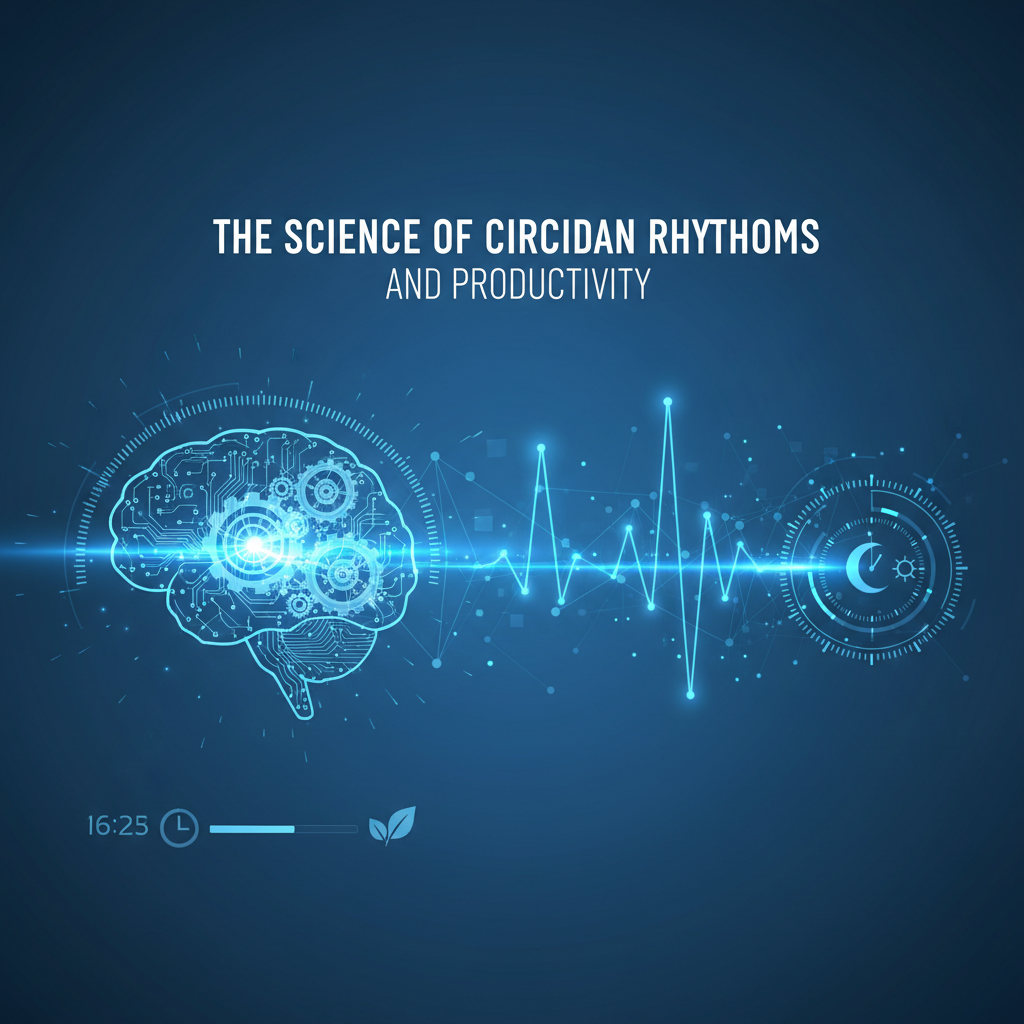
The Science of Circadian Rhythms and Productivity
 Dominic Mueller
The Silent Maestro: How Circadian Rhythms Orchestrate Our Productivity
In our relentlessly fast-paced world, where the pursuit of productivity often feels like an Olympic sport, we're constantly searching for the next hack, the latest app, or the most efficient routine. But what if the greatest secret to unlocking our peak performance wasn't found in an external tool, but rather in the intricate, internal clock ticking within each of us? Enter the fascinating world of circadian rhythms – the biological maestros silently orchestrating nearly every aspect of our existence, from sleep and digestion to, yes, our very capacity to be productive.
Far from being mere biological curiosities, circadian rhythms are fundamental to the efficient timing and sequencing of our bodily processes. Ignoring their subtle cues is like trying to conduct an orchestra without looking at the score – a chaotic, dissonant mess. Understanding and, more importantly, harmonizing with these rhythms isn't just about feeling better; it's about optimizing our cognitive function, boosting our creativity, and ultimately, reclaiming significant chunks of our productive potential.
What Are Circadian Rhythms? The Body's Internal Clock
At its core, a circadian rhythm is a roughly 24-hour cycle in the biochemical, physiological, or behavioral processes of living beings. The term "circadian" itself comes from the Latin circa diem, meaning "around a day." These aren't just responses to the environment; they are endogenous, meaning they are generated from within, even in the absence of external cues like light. However, environmental factors, particularly light and darkness, act as powerful zeitgebers (German for "time-givers") that help reset and synchronize our internal clocks with the outside world.
The master clock in humans is a tiny cluster of about 20,000 neurons located in the hypothalamus of the brain, called the suprachiasmatic nucleus (SCN). This SCN is directly connected to the optic nerve, meaning light exposure directly informs this central timekeeper. The SCN then orchestrates a symphony of peripheral clocks found in virtually every organ and cell, ensuring they all operate on the same daily schedule.
Think of it like a global communication network. The SCN is the central server, sending out daily updates and synchronization signals to all the individual "app" servers (our organs and cells), ensuring everything runs smoothly and in concert. When this network is disrupted, chaos ensues.
The Pillars of Circadian Influence: Beyond Just Sleep
While sleep is the most well-known output of our circadian system, its influence is far more pervasive. Circadian rhythms regulate a staggering array of physiological processes, each with profound implications for our daily performance and well-being:
- Hormone Release: Melatonin, the "sleep hormone," levels surge in the evening, signaling bedtime. Cortisol, the "stress hormone," peaks in the morning, preparing us for wakefulness and activity. Growth hormone, thyroid-stimulating hormone, and numerous others also follow distinct circadian patterns.
- Body Temperature: Our core body temperature fluctuates throughout the day, typically at its lowest in the early morning hours and highest in the late afternoon/early evening. This temperature dip is crucial for initiating and maintaining sleep.
- Digestion and Metabolism: The timing of our meals and our body's ability to process nutrients are governed by circadian rhythms. Eating at "off" hours can disrupt metabolism and contribute to metabolic disorders.
- Cognitive Function: Our alertness, memory, focus, and problem-solving abilities wax and wane throughout the day in predictable patterns.
- Immune System Function: The efficacy of our immune response actually varies Depending on the time of day, impacting how we respond to vaccines and illnesses.
- Cell Regeneration and Repair: Many cellular processes vital for health and longevity are timed to specific periods within the circadian cycle.
Understanding these broad influences highlights that productivity isn't just about working harder, but about working smarter—in alignment with our natural energetic ebbs and flows.
Circadian Rhythms and Cognitive Performance: Timing is Everything
This is where the direct link between our internal clock and our output becomes glaringly clear. Our brains don't operate at peak efficiency 24/7; they have preferred windows for different types of tasks.
The Bimodal Productivity Curve
For most individuals with a "typical" chronotype (more on that later), cognitive performance generally follows a bimodal curve:
- Morning Peak (Late Morning): After the initial sluggishness of waking up, our cognitive function typically hits a peak in the late morning (roughly 2-4 hours after waking). This is often the ideal time for tasks requiring focused attention, analytical thinking, and complex problem-solving. Cortisol levels are high, promoting alertness, and working memory is generally at its best.
- Afternoon Dip (Post-Lunch Slump): Following the morning peak, most people experience a noticeable dip in alertness and cognitive function in the early to mid-afternoon. Often attributed to lunch, this "post-lunch slump" is a natural trough in our circadian rhythm. During this time, vigilance and sustained attention can decrease, and we might feel more prone to making errors.
- Evening Peak (Late Afternoon/Early Evening): Interestingly, many people experience a second, though often less intense, peak in cognitive function in the late afternoon or early evening. This period can be excellent for tasks demanding creativity, brainstorming, divergent thinking, and collaborative work. Inhibitions might be slightly lower, fostering a more fluid thought process.
Interesting Fact: Research has shown that even medical residents make more diagnostic errors and take longer to interpret ECGs during the early morning hours compared to the late morning or afternoon.
The Role of Chronotype: Are You a Lark, Owl, or Hummingbird?
Not everyone adheres to the "typical" curve. Our chronotype refers to our individual genetically determined predisposition to sleep and wake at a particular time. Generally, people fall into three main categories:
- Larks (Morning People): ~10-20% of the population. They wake early, feel most alert and productive in the morning, and go to bed early.
- Owls (Evening People): ~10-20% of the population. They thrive later in the day, struggle with early mornings, and prefer to go to bed late.
- Hummingbirds (Intermediate/Neither): ~60-80% of the population. They fall somewhere in between, with a more flexible sleep-wake pattern.
Understanding your chronotype is a game-changer for productivity. An "owl" forcing themselves into a "lark's" schedule will constantly battle their biology, leading to chronic sleep debt, reduced performance, and increased stress.
Research Insight: Studies from the University of Groningen found that "night owls" performed better on attention tasks late at night compared to "larks," who showed superior performance in the morning. This isn't just about preference; it's about physiological timing.
Disruptors of the Rhythm: What Throws Us Off Course?
In our modern 24/7 society, disruptions to our circadian rhythms are unfortunately commonplace. These disruptions can have significant detrimental effects on our productivity and health.
- Artificial Light at Night (ALAN): Exposure to blue-spectrum light from screens (phones, tablets, computers, TVs) at night suppresses melatonin production, delaying sleep onset and impacting sleep quality. This effectively "pushes back" our internal clock.
- Shift Work: Working irregular hours directly clashes with our natural circadian timing, leading to circadian misalignment. This is consistently linked to increased risk of chronic diseases, accidents, and reduced cognitive function.
- Jet Lag: Rapid travel across multiple time zones temporarily desynchronizes our internal clock from the local time, causing fatigue, digestive issues, and impaired concentration.
- Irregular Sleep Schedules: Trying to catch up on sleep on weekends ("social jet lag") or having inconsistent bedtimes and wake times prevents our SCN from establishing a stable rhythm.
- Poor Diet and Meal Timing: Eating large meals late at night can disrupt peripheral clocks in our digestive system, leading to metabolic inefficiency and affecting sleep.
- Lack of Daylight Exposure: Insufficient exposure to bright natural light, especially in the morning, fails to provide strong zeitgeber signals to the SCN, weakening our circadian rhythm.
These disruptions don't just make us feel tired; they create a state of chronic stress for our biology, manifesting as reduced focus, impaired decision-making, and lowered resilience.
Practical Strategies for Harmonizing with Your Circadian Rhythm and Boosting Productivity
Aligning with your internal clock isn't about rigid adherence to an impossible schedule, but about making conscious choices that support your natural rhythms.
- Prioritize Consistent Sleep-Wake Times: This is the single most powerful intervention. Aim for a regular bedtime and wake time, even on weekends. This sends a clear signal to your SCN, strengthening your circadian rhythm.
- Optimize Light Exposure:
- Morning Light (Critical!): Get 15-30 minutes of natural light exposure within an hour of waking. Open curtains, go for a walk, or sit by a window. This powerfully signals "wake up" to your SCN.
- Daytime Light: Maximise natural light exposure during the day. Work near windows if possible, take outdoor breaks.
- Evening Darkness: Minimize exposure to artificial light, especially blue light, 1-2 hours before bed. Use warm-colored light bulbs, dim lights, and activate night modes on devices or wear blue-light blocking glasses.
- Strategically Schedule Your Tasks:
- Morning Peak: Reserve your most demanding, analytical, or creatively intensive tasks for your personal "power hours." For most people, this is late morning.
- Afternoon Dip: Use this time for less demanding tasks – administrative work, answering emails, calls, or scheduling meetings that require less intense focus. A short nap (20-30 minutes) can also be incredibly restorative if your work environment allows.
- Evening Peak: If you have a second wind, use it for brainstorming, creative endeavors, collaborative tasks, or light review work that doesn't overstimulate you before bed.
- Mind Your Meals:
- Consistent Meal Times: Try to eat meals at roughly the same time each day to support your digestive system's circadian clock.
- Avoid Late-Night Feasting: Heavy meals close to bedtime can interfere with sleep and metabolic processes.
- Exercise Smart: Regular exercise is beneficial, but the timing matters. Morning or early afternoon exercise can boost alertness and sleep quality. Intense exercise too close to bedtime can be stimulating and interfere with sleep.
- Understand Your Chronotype: Pay attention to when you naturally feel most awake, alert, and tired. If you're a night owl stuck in an early bird job, explore strategies for shifting your schedule slightly or adapting your tasks. Embrace your natural rhythm where possible.
- Create a Wind-Down Routine: Signal to your body that it's time to transition from activity to rest. This could include reading, a warm bath, gentle stretching, or meditation. Avoid work, stressful activities, or bright screens.
The Long-Term Horizon: Embracing Circadian Well-being
The science is clear: our internal clocks are not merely passive timekeepers; they are active architects of our health and performance. Chronic disruption of these rhythms goes beyond temporary fatigue, contributing to an increased risk of obesity, diabetes, cardiovascular disease, mood disorders, and even certain cancers.
By learning to listen to our bodies' subtle cues, by prioritizing stable sleep, intelligent light exposure, and by structuring our days in harmony with our natural energy flows, we perform more efficiently, experience less stress, and bolster our long-term health. It's not about forcing ourselves into an arbitrary schedule, but rather unlocking our innate capacity for peak performance by working with time, instead of constantly fighting against it.
In a world obsessed with doing more, faster, the ultimate productivity hack might just be slowing down enough to understand the silent maestro within. By honoring our circadian rhythms, we don't just optimize our work; we optimize our very existence.
Make Every Second Count
Inspired by this article? Take action now! Create a custom timer to help you manage your time better and reach your goals.
Create Your TimerAbout Dominic Mueller
Dominic Mueller is a German director for television and film with a deep fascination for time and time measurement. When he's not behind the camera crafting compelling visual stories, he explores the intricate world of temporal perception and timekeeping. Based in the beautiful city of Cologne, Germany, Dominic shares his life with his girlfriend and their beloved dog, Nala, finding inspiration in both the precise mechanics of time and the fleeting moments that make life meaningful.