Is Time a River or a Series of Discrete Moments
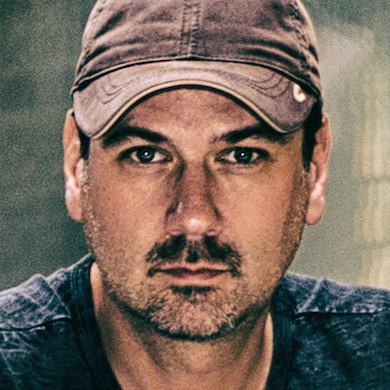 Dominic Mueller
Is Time a River or a Series of Discrete Moments? A Philosophical Deep Dive
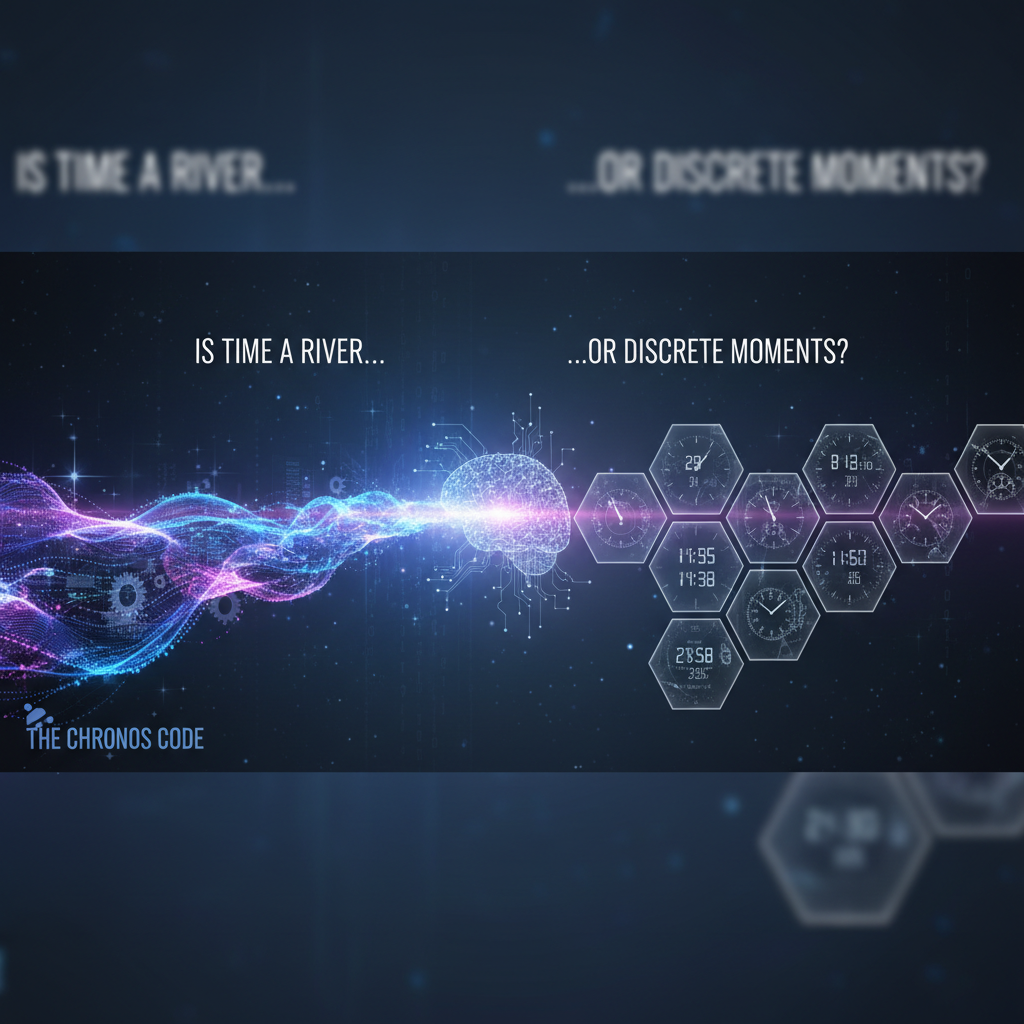
Time. It’s the invisible force that governs our lives, dictating the rhythm of our days and the vast sweep of history. We speak of time flowing like a river, carrying us inevitably from the past into the future. Yet, when we dissect it, we speak of moments, discrete units that mark events, triumphs, and sorrows. This dichotomy – time as a continuous flow versus time as a collection of separate instances – lies at the heart of one of philosophy’s most intriguing and enduring debates. Is time a smooth, unbroken current, or is it a shimmering mosaic of individual, atomic moments?
This question isn't just an academic exercise. Our understanding of time profoundly influences our perceptions of reality, free will, memory, and even the very fabric of the universe. In this exploration, we'll journey through philosophical thought, scientific concepts, and everyday experiences to unravel the intricate nature of time and ponder whether it's an endless river or a succession of fleeting moments.
The River of Time: Heraclitus and the Continuous Flow
The idea of time as an unbreakable, continuous flow has deep roots in ancient philosophy. Perhaps its most famous proponent was the pre-Socratic Greek philosopher Heraclitus, who famously declared, "No man ever steps in the same river twice, for it's not the same river and he's not the same man." This profound statement encapsulates the essence of temporal flow. Just as a river is constantly changing, with new water replacing old, so too is time an ceaseless progression, transforming everything it touches.
From this perspective, time isn't a collection of static points, but a dynamic process where each instant melts seamlessly into the next. Think of a melody: it’s not a series of isolated notes, but a continuous stream of sound where individual notes derive their meaning from their relation to what came before and what follows. This intuitive understanding resonates deeply with our lived experience. We perceive time as an unbroken continuum, a smooth transition from one event to another.
Philosophers advocating for this "river" view often emphasize the present moment as a moving razor's edge between the ever-receding past and the ever-approaching future. The past is gone, the future is yet to be; only the present truly exists, and even it is fleeting, constantly being replaced by a new present. This continuous process implies an inherent fluidity to existence itself.
The Discrete Moments: Zeno and the Quantum Perspective
Conversely, the notion of time as a series of discrete moments posits that time is not seamless but rather composed of individual, indivisible units. The ancient Greek philosopher Zeno of Elea famously presented paradoxes that challenged the notion of continuous motion, implicitly raising questions about the continuity of time. His paradox of the arrow, for example, argues that at any given instant, an arrow in flight is stationary, meaning motion is impossible if time is composed of an infinite series of such static instants. While Zeno's paradoxes were primarily aimed at motion, they subtly underpin the idea that reality, including time, might be composed of fundamental, unchangeable units.
In modern science, the idea of discrete units takes on a different flavor. The advent of quantum mechanics has introduced concepts that suggest a granular nature to the universe, often challenging our classical, continuous intuitions. While time itself isn't directly quantized in the same way energy or momentum is, certain theories in quantum gravity, such as loop quantum gravity, propose that spacetime itself might be discretized at the smallest scales, known as the Planck length and Planck time.
The Planck time is approximately $5.39 \times 10^{-44}$ seconds. This incredibly tiny duration is theorized to be the smallest possible unit of time, below which time itself might cease to have meaning or be measurable. If this hypothesis holds true, then time isn't infinitely divisible; it's made up of fundamental, irreducible "time atoms." This would transform time from a smooth river into a rapid succession of incredibly fast, discrete snapshots, like a super high-resolution movie.
Interesting Fact: While the Planck time is a theoretical concept, its existence would imply that even seemingly continuous processes, like the movement of light, are built upon billions upon billions of these tiny, indivisible temporal units.
The A-Series and B-Series: McTaggart's Argument Against the Reality of Time
The British idealist philosopher J.M.E. McTaggart offered a compelling argument in his 1908 work, "The Unreality of Time," suggesting that time, as we intuitively understand it, might not be real at all. He distinguished between two ways of ordering events:
- The A-series: Events ordered by their positions relative to the present moment (past, present, future). This series is dynamic, as events constantly shift from future to present to past.
- The B-series: Events ordered by their "earlier than" or "later than" relations (e.g., event A is earlier than event B). This series is static; if A is earlier than B, it always will be.
McTaggart argued that the A-series, which captures the fluidity and change we associate with time, is inherently contradictory because an event cannot simultaneously be past, present, and future. However, if the A-series is essential for our concept of time, and it's contradictory, then time itself is unreal. The B-series alone, according to McTaggart, lacks the dynamic element that makes us perceive time as passing.
While McTaggart's conclusion that time is unreal is widely debated and often rejected, his distinction between the A-series and B-series provides a powerful framework for understanding the continuous vs. discrete debate. The A-series aligns with the "river" view, emphasizing the moving present, while the B-series aligns more with a "block universe" model, where all moments (past, present, and future) coexist simultaneously, like a series of discrete, fixed points on a timeless tapestry.
The Block Universe: All Moments Exist
The "block universe" theory, largely inspired by Einstein's theory of relativity, offers a radically different perspective. In this model, time isn't something that flows; instead, all moments – past, present, and future – exist simultaneously and are equally real. Imagine a four-dimensional block of spacetime, where every event throughout cosmic history is laid out like points in space. Our perception of time "flowing" might simply be our consciousness traversing this fixed landscape.
This view strongly supports the idea of time as a collection of discrete, albeit infinitely numerous, moments. Each "moment" is a specific event at a specific point in spacetime. There's no inherent flow because all moments are already there. The past isn't "gone," and the future isn't "yet to come" – they both simply are, just like different locations in space exist simultaneously.
Practical Takeaway: The block universe concept can be unsettling for those who value free will, as it implies a predetermined future. However, some interpretations suggest that even within a fixed block, our choices still play a role in shaping the specific path we traverse through the pre-existing spacetime.
Psychology and Perception: How We Experience Time
Beyond philosophical arguments and scientific theories, our subjective experience of time plays a crucial role. Psychologists have long studied how we perceive and measure time, and their findings often highlight the interplay between continuous and discrete elements.
- "Specious Present": William James, a pioneering psychologist, introduced the concept of the "specious present." He argued that our perception of the present isn't a knife-edge instant but a brief duration of time, containing both memory of the immediate past and anticipation of the immediate future. This "specious present" gives our experience of time a continuous feel, bridging discrete moments into a coherent flow.
- Chronemics: The study of how cultures use and perceive time, shows vast differences. Some cultures prioritize monochronic time, where schedules are strict, and tasks are done sequentially (akin to discrete moments). Others operate on polychronic time, where multiple tasks happen simultaneously, and flexibility is key (reflecting a more fluid, river-like approach).
- Memory and Narrative: We construct our lives as narratives, stringing together discrete events with a continuous thread of cause and effect. Our brains don't just record isolated instances; they weave them into a coherent story, showing how our minds actively integrate the "moments" into a "river."
From a psychological standpoint, it seems our brains are adept at creating a sense of continuity even if the underlying reality might be discrete, or vice-versa. Our perception of time is a complex construction, influenced by attention, emotion, and cultural conditioning.
The Practical Implications: Living in the Temporal Divide
Regardless of whether time is fundamentally a river or a series of moments, understanding these different perspectives offers practical insights into how we navigate life.
- Embracing the "River":
- Mindfulness: Focusing on the continuous flow of the present moment can reduce anxiety about hypothetical futures or past regrets. It encourages us to be where we are.
- Adaptability: Recognizing that everything is in flux, like a river, fosters resilience and adaptability to change. Nothing truly stays the same.
- Growth: The constant movement of time implies progress and the opportunity for personal growth and evolution.
- Appreciating the "Moments":
- Present Moment Awareness: Valuing each individual moment, like tiny jewels in the temporal stream, can lead to greater appreciation for everyday experiences.
- Goal Setting: Discrete moments are ideal for setting goals and measuring progress. Breaking down large tasks into smaller, manageable "moments" makes them less daunting.
- Memory & Reflection: Our memories are often tied to specific, vivid moments. Reflecting on these sharp instances helps us learn and cherish our past.
Ultimately, both perspectives offer valuable lenses through which to view our existence. The continuous flow gives us a sense of purpose and direction, while the discrete moments provide clarity and opportunities for action.
The Unifying Thread: A Quantum River of Moments?
Could it be that time is not exclusively one or the other, but a paradoxical blend? Perhaps the "river" is an emergent property arising from the inconceivably rapid succession of "moments." Just as a movie appears to be continuous motion but is in fact a series of discrete frames, our experience of time might be the macroscopic manifestation of countless microscopic temporal quanta.
A fascinating analogy lies in the concept of digital vs. analog. An analog signal is continuous, like a river. A digital signal is discrete, a sequence of ones and zeros, like moments. Yet, a high-resolution digital signal can be virtually indistinguishable from an analog one to human perception. Could our universe, and time within it, operate on such a principle – fundamentally discrete, but appearing continuous due to its incredibly fine-grained nature?
The deeper we delve, the more we realize that our current scientific and philosophical frameworks might be inadequate to fully grasp the true nature of time. It remains one of the universe's most profound mysteries, challenging our foundational assumptions about reality.
Conclusion: The Enduring Mystery
So, is time a river or a series of discrete moments? The answer, at least for now, remains elusive and multifaceted. Philosophically, both concepts have powerful arguments. Scientifically, while many theories lean towards continuity, the frontier of quantum gravity hints at an underlying granularity. Psychologically, we seem to perceive and construct time in ways that blend both interpretations.
Perhaps time is both simultaneously, a continuous flow made up of infinitesimal, discrete units, much like a pixelated image that appears smooth from a distance. The profound beauty of this question lies not in finding a definitive answer, but in the journey of inquiry itself. It forces us to reconsider our most basic assumptions about reality, prompting us to be more present in the fleeting "now," while appreciating the grand, unfolding narrative of our lives.
The river flows on, moment by moment, carrying us all into the ever-present mystery of tomorrow. And in asking these questions, we demonstrate the unique human capacity to gaze into the temporal abyss and wonder.
Make Every Second Count
Inspired by this article? Take action now! Create a custom timer to help you manage your time better and reach your goals.
Create Your TimerAbout Dominic Mueller
Dominic Mueller is a German director for television and film with a deep fascination for time and time measurement. When he's not behind the camera crafting compelling visual stories, he explores the intricate world of temporal perception and timekeeping. Based in the beautiful city of Cologne, Germany, Dominic shares his life with his girlfriend and their beloved dog, Nala, finding inspiration in both the precise mechanics of time and the fleeting moments that make life meaningful.