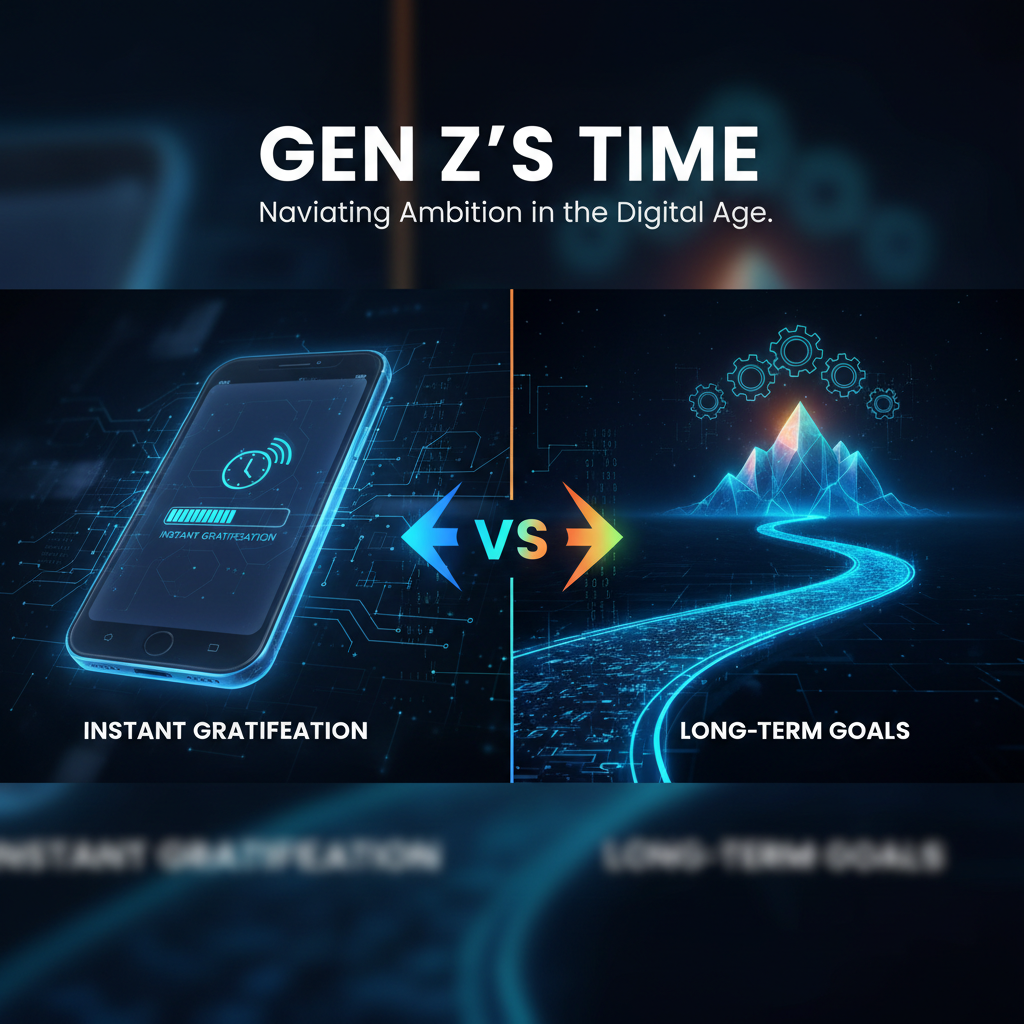
Gen Z's Time: Instant Gratification vs. Long-Term Goals
 Dominic Mueller
Gen Z's Time: The Paradox of Instant Gratification and Long-Term Goals
In an era defined by lightning-fast internet, on-demand services, and fleeting trends, a new generation has emerged, expertly navigating this intricate digital landscape: Generation Z. Born between the late 1990s and the early 2010s, Gen Z has never known a world without smartphones, social media, and instant access to information. This constant connectivity has shaped their perception of time, fostering a unique relationship with both immediate rewards and future aspirations. But how does this generation, often characterized by its need for instant gratification, reconcile this with the pursuit of long-term goals that demand patience, perseverance, and delayed rewards?
This article delves into the fascinating duality of Gen Z's relationship with time, exploring the cultural, psychological, and technological factors that contribute to their simultaneous embrace of "now" and their strategic planning for "later." We'll uncover the challenges and advantages of this temporal paradox, offering insights into how this dynamic impacts their education, careers, and overall well-being.
The Digital Crucible: Shaping Gen Z's Time Perception
To understand Gen Z's temporal perspective, we must first acknowledge the environment in which they grew up. The digital age isn't just a backdrop for their lives; it's an intrinsic part of their very being, fundamentally altering their expectations about speed and accessibility.
The Rise of Instant Gratification
The concept of instant gratification isn't new, but for Gen Z, it's been supercharged by technology. Consider these examples:
- Streaming Services: Why wait for a weekly episode when you can binge-watch an entire season in a day? Services like Netflix, Hulu, and Disney+ have normalized immediate content consumption.
- E-commerce: With one-click ordering and same-day delivery, acquiring goods is faster than ever. The thrill of anticipation is often replaced by the satisfaction of immediate possession.
- Social Media Validation: A post goes live, and within seconds, likes, comments, and shares flood in. This provides a constant stream of dopamine hits, reinforcing the desire for immediate feedback and recognition.
- Search Engines: A question pops into their mind, and within milliseconds, Google provides answers. The need for sustained research or waiting for information is largely archaic.
This constant exposure to immediate rewards trains the brain to expect quick outcomes. Research by institutions like the Pew Research Center consistently shows Gen Z as the most digitally native generation, spending significant portions of their day online. This isn't inherently negative, but it does cultivate a mindset where patience can feel like a luxury, not a necessity.
The Paradoxical Drive for Long-Term Success
Despite this ingrained preference for immediacy, surveys and studies contradict the notion that Gen Z is entirely short-sighted. In fact, many reports indicate that Gen Z is remarkably pragmatic and keenly focused on their future.
- Career Ambition: A 2019 LinkedIn study found that Gen Z is highly career-focused, with many starting career planning earlier than previous generations. They are often driven by a desire for financial stability, meaningful work, and opportunities for growth.
- Entrepreneurial Spirit: Compared to millennials, Gen Z shows a stronger inclination towards entrepreneurship. They see starting their own ventures as a path to autonomy and impact, which requires significant long-term vision and sustained effort.
- Financial Prudence: Emerging data suggests Gen Z is more financially literate and conservative than millennials were at their age, often saving earlier and avoiding debt. This indicates a strong future-oriented mindset.
- Education as an Investment: Many Gen Z individuals view higher education or specialized training as a crucial investment in their future, understanding that it paves the way for better career opportunities and financial security.
This creates a fascinating paradox: a generation accustomed to instant rewards simultaneously plans and strategizes for a future that might be decades away. They are the ultimate temporal jugglers, attempting to live in the "now" while meticulously crafting their "later."
Navigating the Temporal Tightrope: Challenges and Advantages
This constant negotiation between immediate desires and future aspirations presents both unique challenges and unexpected advantages for Gen Z.
The Challenges: The Shadow of Impatience and Burnout
The quest for both speed and long-term success can lead to several pitfalls:
- Reduced Attention Spans: The constant influx of information and the expectation of quick resolutions can shorten attention spans, making it harder to engage with complex tasks that require sustained focus over time. A 2018 study by Microsoft Canada suggested that the average human attention span had dropped from 12 seconds in 2000 to 8 seconds, attributed in part to digital habits.
- "Hustle Culture" and Burnout: While ambition is admirable, the pressure to achieve immediate results while also building for the future can fuel a relentless "hustle culture." This can lead to stress, anxiety, and burnout, as individuals feel compelled to work tirelessly without adequate rest. The constant need to appear productive on social media further exacerbates this.
- Lack of Perseverance in Delayed Gratification: When results aren't immediate, it can be tempting to abandon projects or goals. The inability to tolerate waiting can hinder progress in areas like skill development, relationship building, or complex problem-solving, all of which require significant time investments.
- Comparison Culture: Social media often presents a curated, idealized version of success, where achievements appear effortless and instant. This can lead to feelings of inadequacy and pressure to achieve similar "instant successes," obscuring the years of hard work behind many accomplishments.
The Advantages: Agility, Adaptability, and Entrepreneurial Drive
Despite the challenges, Gen Z's unique relationship with time also equips them with powerful assets:
- Hyper-Efficiency and Task Management: Accustomed to juggling multiple digital platforms and projects, Gen Z often develops strong multi-tasking skills and a knack for finding the quickest, most efficient path to a solution. This can translate into remarkable productivity in the workplace.
- Adaptability and Resilience: The rapidly changing digital landscape means Gen Z is comfortable with constant change and the need to quickly adapt to new technologies and trends. This agility is invaluable in a fast-evolving global economy, enabling them to pivot and learn new skills rapidly.
- Iterative Approach to Goals: Instead of viewing long-term goals as rigid, insurmountable mountains, Gen Z often adopts an iterative, agile approach. They break down large goals into smaller, manageable milestones, celebrating mini-victories along the way. This allows them to experience "instant gratification" even within a long-term trajectory.
- Data-Driven Decision Making: Growing up with instant access to information, Gen Z is adept at researching, analyzing data, and seeking out diverse perspectives. This data-driven approach contributes to more informed decisions regarding their long-term educational and career paths.
- Optimized Time Management Tools: They are masters of scheduling apps, productivity tools, and communication platforms (e.g., Slack, Asana, Google Calendar). This proficiency allows them to manage their time effectively, balancing immediate tasks with future planning.
Bridging the Gap: Practical Takeaways and Insights
How can Gen Z, and those who interact with them, harness the power of instant gratification while fostering the patience needed for long-term success?
For Gen Z Individuals:
- Mindful Digital Consumption: Be intentional about screen time. Set limits, use "do not disturb" features, and practice digital detoxes. This helps recalibrate your brain's expectation for constant stimulation and instant rewards.
- Embrace the "Mini-Milestone" Approach: Break down daunting long-term goals into smaller, achievable steps. Celebrate each mini-milestone. This provides bursts of "instant gratification" that fuel motivation for the larger objective.
- Practice Delayed Gratification Intentionally: Consciously choose to wait for something. Whether it's saving money for a big purchase instead of splurging, or dedicating time to a challenging project before rewarding yourself, intentionally delaying gratification strengthens your willpower muscle.
- Cultivate Deep Work: Schedule dedicated, uninterrupted blocks of time for tasks that require deep focus and concentration. Minimize distractions during these periods. This trains your brain to engage with complex problems over extended periods.
- Seek Mentorship: Learn from individuals who have achieved long-term success. Understand their journeys, including the failures and the time investment required. Their stories can provide valuable perspective on the value of patience and perseverance.
- Reflect on Your "Why": Connect your long-term goals to your core values and passions. When faced with the temptation of instant gratification, remembering your deeper purpose can provide the motivation to stay on track.
For Educators and Employers:
- Structure Projects with Iterative Feedback: Instead of waiting for a final product, incorporate regular check-ins and feedback loops. This provides students/employees with "instant gratification" in the form of validation and guidance, keeping them engaged in long-term projects.
- Highlight the "Micro-Victories": Acknowledge and celebrate progress along the way, not just the ultimate outcome. Publicly recognize effort and learning, not just perfection.
- Provide Clear Roadmaps and Purpose: Clearly articulate how current tasks contribute to larger, long-term goals. Gen Z thrives on understanding the "why" behind their efforts.
- Integrate Digital Tools Strategically: Leverage the digital tools Gen Z is already comfortable with for project management, collaboration, and learning. However, also teach them when to disconnect and engage in focused, offline work. The goal is to use technology as a tool, not to be enslaved by it.
- Foster a Culture of Learning and Growth: Emphasize that failure is a part of the learning process and that mastery takes time. Encourage experimentation and provide a safe space for taking risks.
- Develop Mentorship Programs: Connect Gen Z with experienced professionals who can share their journeys and demonstrate the value of long-term vision and sustained effort.
Conclusion: The Resilient Time Travelers
Gen Z's relationship with time is complex, characterized by an inherent tension between the desire for immediate rewards and a pragmatic understanding of the need for long-term planning. They are not simply a generation of impatient digital natives; they are adept time travelers, capable of embracing the speed of the present while strategically charting a course for the future.
This apparent paradox isn't a weakness, but rather a unique strength. Their digital fluency, adaptability, and drive for efficiency, when coupled with intentional strategies for patience and deep work, position them to be incredibly successful innovators, problem-solvers, and leaders. By understanding and embracing this dynamic interplay of instant gratification and long-term goals, Gen Z can harness their temporal advantages, navigating the complexities of the modern world with unprecedented agility and purpose. Their time is now, and their future, meticulously planned and iteratively built, is equally bright.
Make Every Second Count
Inspired by this article? Take action now! Create a custom timer to help you manage your time better and reach your goals.
Create Your TimerAbout Dominic Mueller
Dominic Mueller is a German director for television and film with a deep fascination for time and time measurement. When he's not behind the camera crafting compelling visual stories, he explores the intricate world of temporal perception and timekeeping. Based in the beautiful city of Cologne, Germany, Dominic shares his life with his girlfriend and their beloved dog, Nala, finding inspiration in both the precise mechanics of time and the fleeting moments that make life meaningful.