Festival Time: How Celebrations Rewire Our Sense of Duration
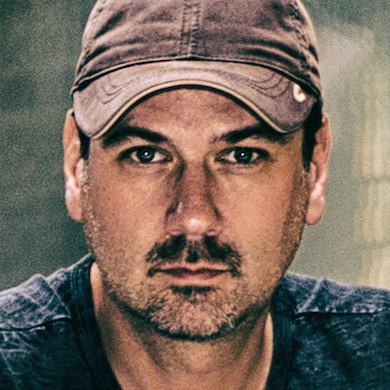 Dominic Mueller
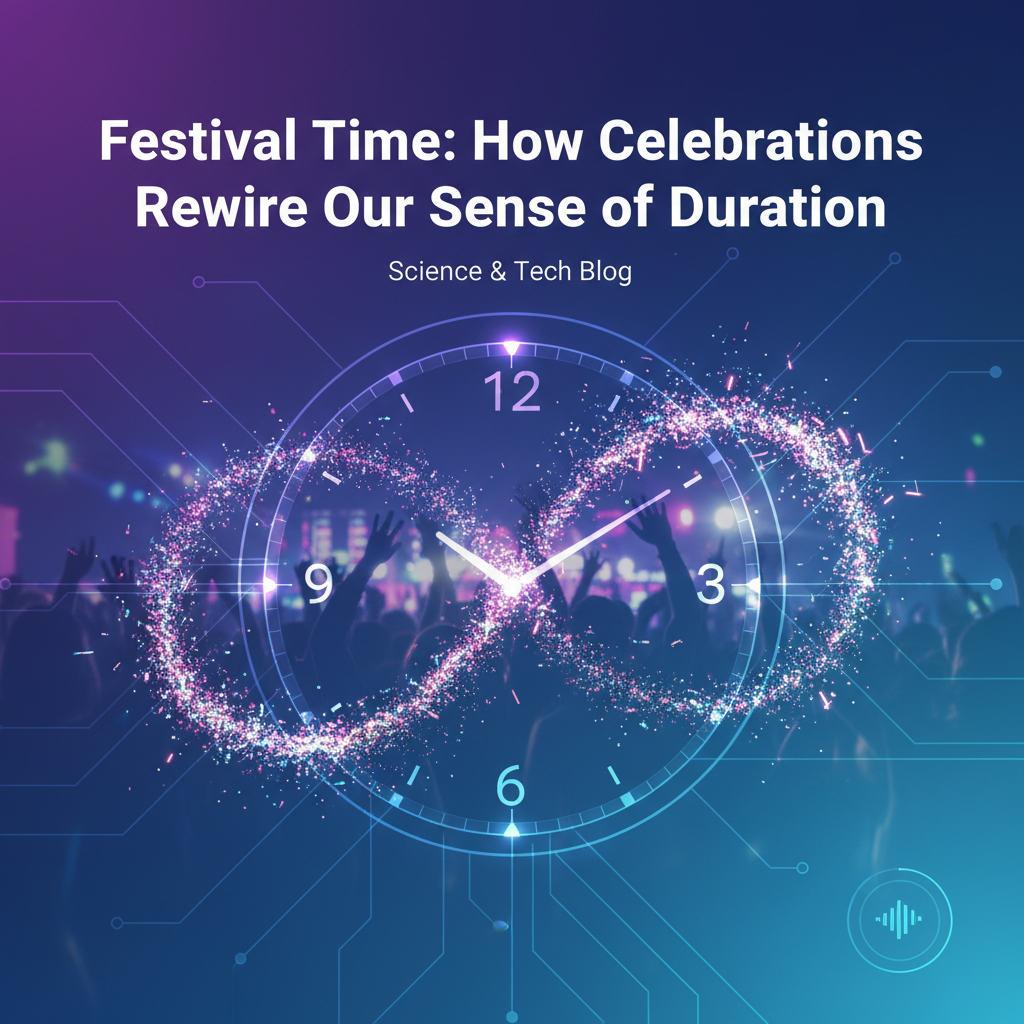
Festival Time: How Celebrations Rewire Our Sense of Duration
The air hums with anticipation. Lights twinkle, music swells, and the scent of festive foods hangs heavy. Whether it’s the dizzying energy of a New Year's Eve countdown, the poignant slowness of a somber remembrance day, or the vibrant chaos of a summer music festival, celebrations profoundly impact us. But beyond the joy, the reflection, or the sheer adrenaline, there's a subtle yet powerful transformation happening: our sense of time is being rewired.
We often experience time as a relentless, linear march. Days bleed into weeks, weeks into months, and suddenly, another year has passed. Yet, during festivals and significant cultural events, this ordinary flow is disrupted. Time seems to stretch, shrink, accelerate, or even loop back on itself. This isn't just a subjective feeling; it's a testament to the intricate relationship between our cognitive processes, emotional states, and the cultural frameworks that define our collective experiences.
In this article, we'll embark on a journey to explore how festivals, from ancient rituals to modern raves, don't just mark time but fundamentally alter our perception of it. We'll delve into the psychological, neurological, and sociological mechanisms at play, offering insights into why these special periods feel so different and what lessons we can glean about the very nature of duration.
The Temporal Anomaly: Why Festival Time Feels Different
Have you ever noticed how time seems to fly when you’re having fun? Or how an hour in a dentist’s chair can feel like an eternity? These common experiences are amplified and manipulated during festivals. The intense sensory input, heightened emotions, and collective effervescence create a unique temporal warp.
The Role of Emotional Arousal
Research consistently shows that our emotions are directly linked to our perception of time. When we are highly aroused – whether by excitement, joy, or even stress – our internal clock, often referred to as the "pacemaker-accumulator model," can be affected. During festivals, the positive emotional arousal is immense. The thrill of anticipation, the joy of shared experiences, and the rush of novel stimuli all contribute to an accelerated internal clock. This can make the entire event feel incredibly short in retrospect, even if it spanned several days. "Where did the time go?" is a common lament after a fantastic festival.
Novelty and Attention
Our brains are hardwired to pay attention to novelty. A new environment, unfamiliar sounds, vibrant colors, and unique social interactions all demand processing power. During festivals, we are constantly bombarded with novel stimuli. When our attention is intensely focused on these new experiences, our perception of time can become distorted. We might not notice the minute-by-minute progression as much, leading to a feeling of time compression. Conversely, the sheer volume of rich, detailed memories created during a festival can make the event feel longer and more substantial when we recall it later, as if more 'content' was packed into the same duration. This is a fascinating paradox: compressed in the moment, expanded in recollection.
Collective Effervescence and Social Synchrony
Sociologist Émile Durkheim coined the term "collective effervescence" to describe the sense of communal elation and shared energy that arises during religious rituals and mass gatherings. Festivals are prime examples of this phenomenon. When individuals engage in synchronized activities – dancing to the same beat, chanting together, participating in rituals – their internal physiological rhythms can synchronize. This social entrainment can create a powerful sense of timelessness, where individual worries and the ticking clock fade into the background as one becomes absorbed in the collective flow. The shared experience becomes the primary reality, transcending individual temporal boundaries.
Rituals, Rhythms, and the Fabric of Time
Festivals are not random gatherings; they are often meticulously structured events, rooted in ancient traditions and designed to mark specific points in time. These structures, rhythms, and rituals play a crucial role in how we perceive the duration of the event.
Markers of Beginning and End
Think of a countdown to New Year's or the lighting of a specific flame at the start of a cultural festival. These explicit markers provide clear temporal boundaries. They create a distinct "festival time" that is set apart from "ordinary time." This demarcation allows participants to fully immerse themselves, knowing there's a defined start and end. Without these clear markers, the event might feel less special, less contained, and less impactful on our temporal perception.
Repetitive Structures and Anticipation
Many festivals involve repeating activities – daily parades, specific dances performed at certain hours, or recurring musical sets. While novelty can compress time, rhythmic repetition coupled with anticipation can also alter it. The anticipation for a specific event within the festival can make the lead-up feel long, yet the event itself might pass quickly. The cyclical nature of some festivals, like annual harvest celebrations or seasonal solstices, explicitly connects them to larger cosmic rhythms, reinforcing a non-linear, cyclical understanding of time that contrasts with our daily linear experience.
The Sacred and Profane: Separating Festival Time
Mircea Eliade, in his work on the sacred and the profane, argued that archaic societies understood time not as a continuous flow but as two distinct modalities: profane time (ordinary, everyday, linear) and sacred time (mythical, reversible, capable of being recaptured). Festivals, particularly those rooted in religious or ancient traditions, are entry points into sacred time. They are moments when the past is made present, when myths are re-enacted, and when the boundaries of ordinary existence are transcended. This concept fundamentally alters our perception, as we are no longer just experiencing the present moment but tapping into an eternal or cyclical dimension.
Beyond the Party: Memory, Meaning, and the Enduring Impression
The impact of festival time extends long after the last confetti has fallen and the last note has faded. How we remember these experiences is deeply intertwined with how we perceived their duration and significance.
Why Festival Memories Are So Vivid
The intense emotional arousal, multi-sensory experiences, and novel stimuli during festivals create flashbulb memories – highly detailed, vivid, and seemingly accurate recollections of significant events. Because these memories are so rich and emotionally charged, they often feel "longer" in recollection. Our brain essentially creates a dense temporal package, making the event feel substantial even if it flew by in the moment. This 'packing' of information leads to a retrospective inflation of duration.
The 'Retrospective Elongation' Phenomenon
A fascinating aspect of time perception is that an event that felt short while it was happening can feel much longer when recalled later. This is often observed with vacations or intense experiences. During festivals, the sheer volume of unique, memorable moments means that when we look back, there's so much to unpack and recount. Each distinct memory point becomes a "temporal landmark," and the more landmarks we have, the longer the journey seems in retrospect. This contributes to the feeling that a festival was a rich, expansive period, regardless of its objective length.
Festivals as Temporal Anchors
Festivals serve as socio-cultural anchors, segmenting the year and providing temporal landmarks against which we measure other events. "Was that before or after Diwali?" "Did that happen in the summer of the big music festival?" They break the monotony of industrial time, providing much-needed punctuation marks in our lives. This segmentation profoundly influences our longitudinal sense of time, making the year feel less like an undifferentiated continuum and more like a series of distinct, memorable chapters.
Practical Takeaways and Insights
Understanding how festivals rewire our sense of duration offers several intriguing insights applicable to our daily lives.
- Cultivate Novelty: If you want time to feel richer and more substantial, inject novelty into your routine. Explore new places, learn new skills, or engage in different activities. These new experiences create more "temporal landmarks" and make periods feel longer in retrospect.
- Embrace Emotional Arousal: While chronic stress is detrimental, positive emotional arousal broadens our perception and makes experiences more vivid. Seek out activities that genuinely excite and engage you.
- Mindful Engagement: During an enjoyable experience, try to be fully present. The more deeply you engage all your senses and emotions, the more packed with content the moment will be, yielding a richer memory later, even if the present moment feels fleeting.
- Create Your Own Rituals: You don't need a massive festival to experience altered time. Introduce small rituals into your week or month – a special "Sunday brunch" or a "Friday night board game." These regular, intentional deviations from the norm can create mini-temporal shifts, marking time more distinctly.
- Understand the Power of Shared Experiences: The collective aspect of festivals is a powerful temporal modulator. Seek out opportunities for shared joy and action. Collective effervescence is not just for festivals; it can be found in team sports, community projects, or even a shared meal with loved ones.
- Reflect and Recount: Actively recalling and recounting festival experiences – whether through photos, journaling, or sharing stories – helps to solidify and even extend the perceived duration of the event. This retrospective processing enriches your memory and reinforces the impact of that "festival time."
Conclusion: The Enduring Magic of Temporal Alchemy
Festivals are more than just breaks from routine; they are profound exercises in temporal alchemy. They highlight the subjective, malleable nature of time, demonstrating how our internal clocks are far from fixed. Through heightened emotions, sensory overload, collective action, and millennia-old rituals, celebrations stretch and shrink, accelerate and decelerate our perception of duration, leaving us with vivid memories and a reconfigured understanding of the past.
By stepping outside the mundane flow of linear time and immersing ourselves in the unique rhythms of festival time, we not only create unforgettable memories but also gain a deeper appreciation for the complex interplay between our minds, our bodies, and the cultural tapestry that ultimately shapes our very experience of existence. So next time you find yourself swept up in the magic of a festival, take a moment to appreciate not just the spectacle, but the silent, powerful way it is expertly rewiring your perception of the most fundamental dimension of all: time itself.
Make Every Second Count
Inspired by this article? Take action now! Create a custom timer to help you manage your time better and reach your goals.
Create Your TimerAbout Dominic Mueller
Dominic Mueller is a German director for television and film with a deep fascination for time and time measurement. When he's not behind the camera crafting compelling visual stories, he explores the intricate world of temporal perception and timekeeping. Based in the beautiful city of Cologne, Germany, Dominic shares his life with his girlfriend and their beloved dog, Nala, finding inspiration in both the precise mechanics of time and the fleeting moments that make life meaningful.