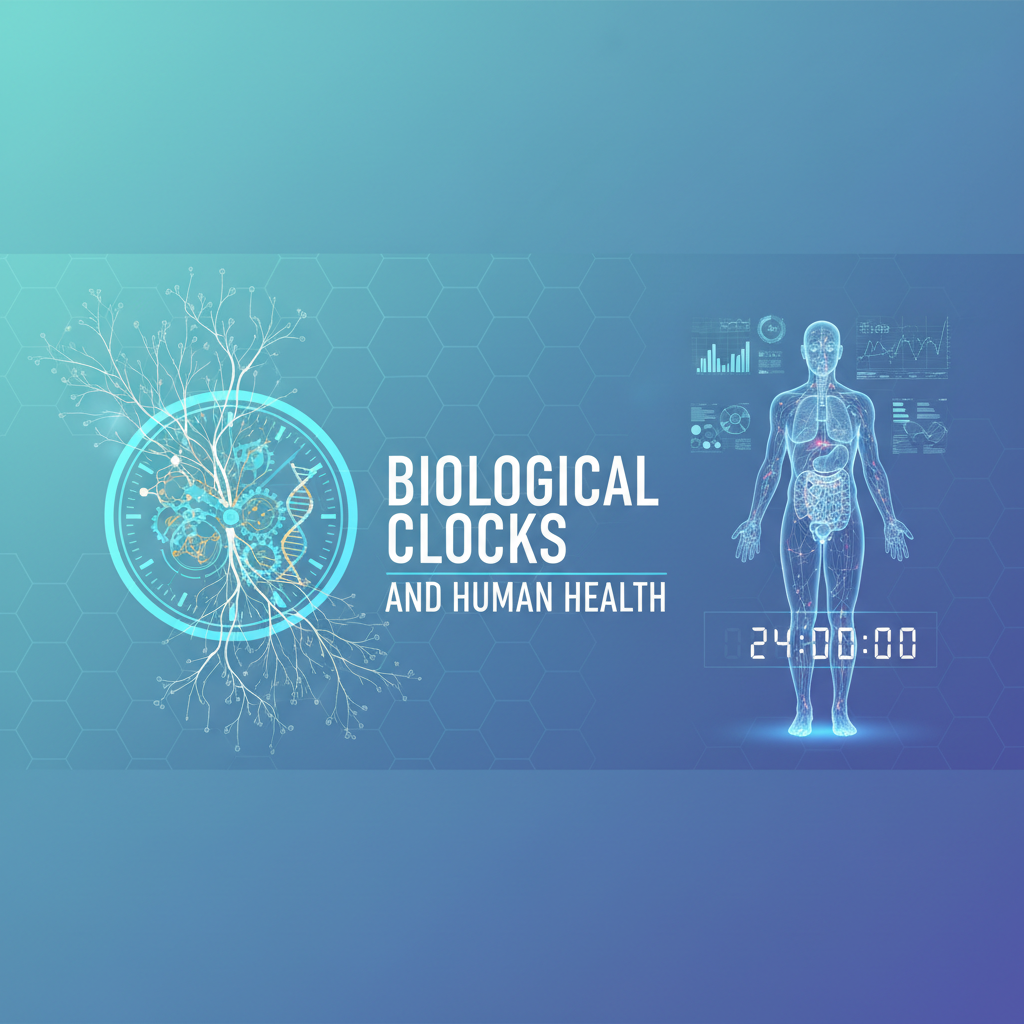
Biological Clocks and Human Health
 Dominic Mueller
The Rhythms Within: How Biological Clocks Orchestrate Human Health
Have you ever wondered why you feel groggy waking up at 3 AM after a late night, even if you’ve had eight hours of sleep? Or why some people are "morning larks" and others "night owls"? The answer lies in the incredible, often invisible, world of our biological clocks. These internal timekeepers, honed over millennia of evolution, orchestrate nearly every aspect of our physiology, from our sleep-wake cycles to hormone release, metabolism, and even our mood. For too long, humanity lived in relative harmony with these natural rhythms, guided by the sun and seasons. But in our modern, 24/7 world, we've begun to push the boundaries, often to the detriment of our health.
This article delves deep into the fascinating interplay between our biological clocks and human health. We’ll explore the intricate mechanisms that govern these rhythms, uncover their profound impact on our well-being, and discuss how understanding and respecting our internal time can unlock a healthier, more vibrant life.
The Maestro of Time: The Circadian Rhythm
At the heart of our biological timing system is the circadian rhythm, a roughly 24-hour cycle that governs a multitude of physiological and behavioral processes. The term "circadian" comes from the Latin words "circa dies," meaning "around a day." While these rhythms are endogenous (generated internally), they are constantly reset and fine-tuned by external cues, most notably light.
The Suprachiasmatic Nucleus (SCN): Our Master Clock
The undisputed maestro of the circadian system is a tiny cluster of neurons nestled deep within the hypothalamus of the brain, called the suprachiasmatic nucleus (SCN). Often referred to as the "master clock," the SCN receives direct light input from the eyes via the retinohypothalamic tract. Even blind individuals who cannot consciously perceive light can still entrain their SCN to light-dark cycles, thanks to specialized photoreceptors in the retina.
The SCN doesn't just keep time; it communicates time to virtually every cell and organ in the body. It does this through a complex network of hormonal signals (like melatonin), neural pathways, and temperature fluctuations. This communication ensures that peripheral "slave clocks" in organs like the liver, pancreas, heart, and lungs are all synchronized and working in harmony with the SCN.
Beyond 24 Hours: Other Biological Rhythms
While the circadian rhythm is the most prominent, our bodies hum with a symphony of other rhythms operating on different timescales:
- Ultradian Rhythms: These cycles are shorter than 24 hours. Examples include:
- The 90-minute REM-NREM sleep cycle.
- Hormone pulsatility, such as the release of growth hormone multiple times a day.
- The basic rest-activity cycle, which influences alertness and focus throughout the day.
- Infradian Rhythms: These cycles are longer than 24 hours. The most well-known example is the menstrual cycle in women, typically lasting around 28 days. Seasonal affective disorder (SAD) is also linked to infradian rhythms influenced by changing light exposure throughout the year.
Each of these rhythms plays a crucial role in maintaining various physiological functions, demonstrating the sophisticated temporal organization of biological systems.
The Health Consequences of a Disrupted Clock
When our internal clocks fall out of sync with external cues, or when the various internal clocks within our body lose their coherence, the consequences can be far-reaching and detrimental to our health. This state is known as circadian disruption or desynchronization.
Sleep Disturbances: The Most Obvious Sign
The most immediate and noticeable impact of a disrupted clock is on our sleep-wake cycle. Jet lag is a classic example: traveling across time zones rapidly shifts our external environment, but our SCN and peripheral clocks take time to adjust. This leads to fatigue, irritability, and difficulty sleeping or staying awake at appropriate times. Chronic forms of this disruption are seen in shift workers, who are constantly fighting against their natural circadian rhythm.
- Interesting Fact: The Nobel Prize in Physiology or Medicine in 2017 was awarded to Jeffrey C. Hall, Michael Rosbash, and Michael W. Young for their discoveries of the molecular mechanisms controlling the circadian rhythm. Their work in fruit flies revealed the "clock genes" that are remarkably conserved across species, including humans.
Metabolic Mayhem: The Link to Obesity and Diabetes
Our biological clocks deeply influence our metabolism. The timing of food intake, hormone release (like insulin and ghrelin), and energy expenditure are all under circadian control. When these rhythms are disrupted:
- Insulin sensitivity decreases at night, meaning late-night eating can lead to higher blood sugar spikes.
- Hormones that regulate appetite (ghrelin and leptin) can become dysregulated, leading to increased hunger and cravings for unhealthy foods.
- Energy expenditure patterns shift, potentially promoting fat storage.
Research consistently shows a strong correlation between circadian disruption (e.g., due to shift work, irregular meal times, or chronic sleep deprivation) and an increased risk of obesity, metabolic syndrome, and Type 2 diabetes. The concept of "eating with the sun" (time-restricted eating) gains scientific backing from this understanding.
Cardiovascular Disease: A Timely Risk
Even our heart and blood vessels beat to a circadian drum. Blood pressure, heart rate, and clotting tendencies all exhibit daily fluctuations. A sudden increase in cardiovascular events, such as heart attacks and strokes, occurs in the morning hours, aligning with circadian-driven changes in blood pressure and platelet aggregation. Chronic circadian disruption contributes to inflammation, oxidative stress, and lipid imbalances, all of which are risk factors for cardiovascular disease.
Mental Health: The Mind-Body Connection
The intricate link between biological clocks and mental health is becoming increasingly clear. The SCN regulates the production of neurotransmitters and hormones crucial for mood regulation. Circadian disruption is a common feature and a contributing factor in various mental health conditions:
- Depression: People with depression often experience disturbed sleep patterns and altered circadian rhythms. Bright light therapy, which helps reset the SCN, is an effective treatment for certain types of depression, especially seasonal affective disorder.
- Bipolar Disorder: Episodes of mania and depression are frequently linked to severe disruptions in sleep and circadian rhythms.
- Anxiety Disorders: Irregular sleep and circadian misalignment can exacerbate anxiety symptoms.
Cancer: A Deeper Connection
Emerging research suggests that chronic circadian disruption may even increase the risk of certain cancers. Our biological clocks play a role in regulating cell division, DNA repair, and immune surveillance—processes vital for preventing cancer. When these clocks are out of sync, these protective mechanisms can be compromised. Shift workers, for instance, have a higher incidence of breast, prostate, and colorectal cancers. This area of research is leading to new fields like chronotherapy, where cancer treatments are timed to align with the body's natural rhythms to maximize efficacy and minimize side effects.
Practical Takeaways: Aligning with Your Inner Clock
Understanding the profound impact of our biological clocks isn't just academic; it offers powerful insights into how we can optimize our health. Here are some actionable strategies to help you synchronize with your internal rhythms:
- Prioritize Consistent Sleep: Go to bed and wake up at roughly the same time every day, even on weekends. This regular schedule helps to entrain your SCN and strengthen your circadian rhythm.
- Embrace Morning Light: Expose yourself to bright natural light within an hour of waking up. This signals to your SCN that the day has begun, suppressing melatonin production and promoting alertness.
- Minimize Evening Artificial Light: As dusk approaches, dim your lights and reduce exposure to blue light from screens (phones, tablets, computers). Blue light is particularly effective at suppressing melatonin and delaying sleep. Consider using blue-light-blocking glasses if evening screen time is unavoidable.
- Time Your Meals Wisely: Aim to consume most of your calories during daylight hours, ideally finishing your last meal 2-3 hours before bedtime. This aligns with your body's natural metabolic rhythm, which is more efficient during the active phase.
- Schedule Exercise Strategically: Regular physical activity is beneficial, but the timing can matter. Morning or early afternoon exercise is generally optimal, as intense physical activity too close to bedtime can interfere with sleep.
- Manage Stress: Chronic stress can disrupt hormone rhythms and negatively impact sleep. Incorporate stress-reducing techniques like meditation, yoga, or deep breathing into your daily routine.
- Be Mindful of Naps: Short power naps (20-30 minutes) can be beneficial, but long or late-afternoon naps can make it harder to fall asleep at night.
- Understand Your Chronotype: Are you a natural morning lark or a night owl? While modern society often favors larks, understanding your natural inclination can help you structure your day for optimal productivity and well-being within your constraints.
- Hydration: While not directly a circadian signal, maintaining proper hydration can improve overall bodily function and contribute to better sleep quality.
The Future of Chronobiology: Personalized Medicine
The field of chronobiology is rapidly evolving, leading to exciting new frontiers in personalized medicine. Researchers are developing tools to:
- Accurately assess individual chronotypes and circadian phase.
- Design personalized light therapy protocols for sleep disorders and mood disturbances.
- Develop chronopharmacology approaches, where drug administration is timed for maximum efficacy and minimal side effects, leveraging the body's natural rhythms.
- Explore gene editing techniques to address fundamental clock gene dysfunctions.
As we continue to unravel the complexities of our internal clocks, we gain an unparalleled opportunity to optimize human health and resilience in an increasingly demanding world.
Conclusion: Living in Harmony with Time
Our biological clocks are not merely abstract scientific concepts; they are the fundamental architects of our health and well-being. From the gentle ebb and flow of our daily energy to the intricate dance of hormones and cellular repair, every physiological process is timed with exquisite precision. In an age where artificial light, constant connectivity, and demanding schedules frequently clash with our evolutionary programming, understanding and respecting these innate rhythms is more crucial than ever.
By making conscious choices to align our lifestyles with our internal clocks, we can move beyond simply existing and truly thrive. It's about reconnecting with the ancient wisdom embedded in our DNA, fostering a harmony between our inner and outer worlds, and ultimately, unlocking a healthier, more vibrant future. Let’s remember that time is not just a linear progression, but a cyclical force that deeply shapes who we are, how we feel, and how well we live. It's time to listen to our bodies' timeless wisdom.
Make Every Second Count
Inspired by this article? Take action now! Create a custom timer to help you manage your time better and reach your goals.
Create Your TimerAbout Dominic Mueller
Dominic Mueller is a German director for television and film with a deep fascination for time and time measurement. When he's not behind the camera crafting compelling visual stories, he explores the intricate world of temporal perception and timekeeping. Based in the beautiful city of Cologne, Germany, Dominic shares his life with his girlfriend and their beloved dog, Nala, finding inspiration in both the precise mechanics of time and the fleeting moments that make life meaningful.